Middle East, North Africa, Afghanistan & Pakistan / YEM
Yemen, Rep.

ⓘ
2021 Factbook flag mirror; image identity has not been individually audited. Source.
Last updated: October 29, 2026
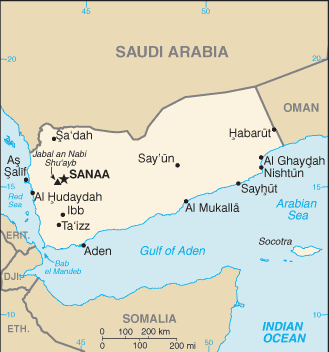
Map image could not be loaded. Open source image.
ⓘ
CIA World Factbook map, February 2021 media edition. Identity reviewed; current boundaries have not been audited. visual contact sheet or original identity check; does not verify current boundaries Boundaries, place names and designations may be dated or disputed; original annotations retained. SHA-256: aaf513cf3dbebd5f08546df421b4cc12e447ef106966e204809665f1bb67908d. Provenance and inspection record.ⓘ
World Bank directory coordinates; approximate location, not a country center. Coordinate reference date is not supplied by the directory. Natural Earth 1:110m land (2022 source); simplified coastline, no political borders. Map source. Land SVG SHA-256: CF26056A39DC0A5B02F65704E279DFA86E77539A8387D0B2C92F907A67739E5E.Introduction
Background:1
The Kingdom of Yemen (colloquially known as North Yemen) became independent from the Ottoman Empire in 1918 and in 1962 became the Yemen Arab Republic. The British, who had set up a protectorate area around the southern port of Aden in the 19th century, withdrew in 1967 from what became the People's Republic of Southern Yemen (colloquially known as South Yemen). Three years later, the southern government adopted a Marxist orientation and changed the country's name to the People's Democratic Republic of Yemen. The exodus of hundreds of thousands of Yemenis from the south to the north contributed to two decades of hostility between the states, which were formally unified as the Republic of Yemen in 1990. A southern secessionist movement and brief civil war in 1994 was quickly subdued. In 2000, Saudi Arabia and Yemen agreed to delineate their border. Fighting in the northwest between the government and the Houthis, a Zaydi Shia Muslim minority, continued intermittently from 2004 to 2010, and then again from 2014 to the present. The southern secessionist movement was revitalized in 2007.
Public rallies in Sana'a against then President Ali Abdallah SALIH -- inspired by similar Arab Spring demonstrations in Tunisia and Egypt -- slowly gained momentum in 2011, fueled by complaints over high unemployment, poor economic conditions, and corruption. Some protests resulted in violence, and the demonstrations spread to other major cities. The Gulf Cooperation Council (GCC) mediated the crisis with the GCC Initiative, an agreement in which the president would step down in exchange for immunity from prosecution. SALIH eventually agreed to step down and transfer some powers to Vice President Abd Rabuh Mansur HADI. After HADI's uncontested election victory in 2012, SALIH formally transferred all presidential powers. In accordance with the GCC Initiative, Yemen launched a National Dialogue Conference (NDC) in 2013 to discuss key constitutional, political, and social issues. HADI concluded the NDC in 2014 and planned to proceed with constitutional drafting, a constitutional referendum, and national elections.
The Houthis, perceiving their grievances were not addressed in the NDC, joined forces with SALIH and expanded their influence in northwestern Yemen, which culminated in a major offensive against military units and rival tribes and enabled their forces to overrun the capital, Sana'a, in 2014. In 2015, the Houthis surrounded key government facilities, prompting HADI and the cabinet to resign. HADI fled first to Aden -- where he rescinded his resignation -- and then to Oman before moving to Saudi Arabia and asking the GCC to intervene militarily in Yemen. Saudi Arabia assembled a coalition of Arab militaries and began airstrikes, and ground fighting continued through 2016. In 2016, the UN initiated peace talks that ended without agreement. Rising tensions between the Houthis and SALIH culminated in Houthi forces killing SALIH. In 2018, the Houthis and the Yemeni Government participated in UN-brokered peace talks, agreeing to a limited cease-fire and the establishment of a UN mission.
In 2019, Yemen’s parliament convened for the first time since the conflict broke out in 2014. Violence then erupted between HADI's government and the pro-secessionist Southern Transitional Council (STC) in southern Yemen. HADI's government and the STC signed a power-sharing agreement to end the fighting, and in 2020, the signatories formed a new cabinet. In 2020 and 2021, fighting continued as the Houthis gained territory and also conducted regular UAV and missile attacks against targets in Saudi Arabia. In 2022, the UN brokered a temporary truce between the Houthis and the Saudi-led coalition. HADI and his vice-president resigned and were replaced by an eight-person Presidential Leadership Council. Although the truce formally expired in 2022, the parties nonetheless refrained from large-scale conflict through the end of 2023. Saudi Arabia, after the truce expired, continued to negotiate with the Yemeni Government and Houthis on a roadmap agreement that would include a permanent ceasefire and a peace process under UN auspices.
Geography
Location:2
Middle East, bordering the Arabian Sea, Gulf of Aden, and Red Sea, between Oman and Saudi Arabia
Geographic coordinates:3
15 00 N, 48 00 E
Map references:4
Middle East
Area:5
Surface area: 527,968 square kilometers (2024)
Area - comparative:7
almost four times the size of Alabama; slightly larger than twice the size of Wyoming
Land boundaries:8
Coastline:9
1,906 km
Maritime claims:10
Climate:11
mostly desert; hot and humid along west coast; temperate in western mountains affected by seasonal monsoon; extraordinarily hot, dry, harsh desert in east
Terrain:12
narrow coastal plain backed by flat-topped hills and rugged mountains; dissected upland desert plains in center slope into the desert interior of the Arabian Peninsula
Elevation:13
Natural resources:14
petroleum, fish, rock salt, marble; small deposits of coal, gold, lead, nickel, and copper; fertile soil in west
Land use:15
Irrigated land:16
6,800 sq km (2012)
Population distribution:17
the vast majority of the population is found in the Asir Mountains (part of the larger Sarawat Mountain system), located in the far western region of the country
Natural hazards:18
sandstorms and dust storms in summer
Geography - note:19
strategic location on Bab el Mandeb, the strait linking the Red Sea and the Gulf of Aden and one of world's most active shipping lanes
People and Society
Population:20
Population: 41,773,878 people (2025)
Nationality:22
Ethnic groups:23
predominantly Arab; but also Afro-Arab, South Asian, European
Languages:24
Arabic (official)
Religions:25
Muslim 99.1% (official; virtually all are citizens, an estimated 65% are Sunni and 35% are Shia), other 0.9% (includes Jewish, Baha'i, Hindu, and Christian; many are refugees or temporary foreign residents) (2020 est.)
Age structure:26
Dependency ratios:27
Median age:28
Population growth rate:29
Population growth rate: 2.89 % annually (2025)
1.78% (2024 est.)
Birth rate:31
Crude birth rate: 34.36 births per 1,000 people (2024)
23.4 births/1,000 population (2024 est.)
Death rate:33
Crude death rate: 4.73 deaths per 1,000 people (2024)
5.5 deaths/1,000 population (2024 est.)
Net migration rate:35
-0.2 migrant(s)/1,000 population (2024 est.)
Population distribution:36
the vast majority of the population is found in the Asir Mountains (part of the larger Sarawat Mountain system), located in the far western region of the country
Urbanization:37
Urban population: 37.03 % of population (2025)
Major urban areas - population:39
3.292 million SANAA (capital), 1.080 million Aden, 941,000 Taiz, 772,000 Ibb (2023)
Sex ratio:40
Mother's mean age at first birth:41
20.8 years (2013 est.)
Maternal mortality ratio:42
Maternal mortality ratio: 118 deaths per 100,000 live births (2023)
118 deaths/100,000 live births (2023 est.)
Infant mortality rate:44
Infant mortality rate: 33.8 deaths per 1,000 live births (2024)
Life expectancy at birth:46
Life expectancy at birth: 69.44 years (2024)
Total fertility rate:48
Total fertility rate: 4.5 births per woman (2024)
2.82 children born/woman (2024 est.)
Gross reproduction rate:50
1.37 (2024 est.)
Drinking water source:51
At least basic drinking water services: 75.04 % of population (2024)
Health expenditure:53
Current health expenditure: 9.7 % of GDP (2023)
Physician density:55
Physicians: 0.1 per 1,000 people (2023)
0.1 physicians/1,000 population (2023)
Sanitation facility access:57
At least basic sanitation services: 63.08 % of population (2024)
Obesity - adult prevalence rate:59
17.1% (2016)
Alcohol consumption per capita:60
Tobacco use:61
Children under the age of 5 years underweight:62
40.7% (2022 est.)
Currently married women (ages 15-49):63
60.4% (2023 est.)
Child marriage:64
Literacy:65
Environment
Environmental issues:66
limited natural freshwater resources; inadequate supplies of potable water; overgrazing; soil erosion; desertification
International environmental agreements:67
Climate:68
mostly desert; hot and humid along west coast; temperate in western mountains affected by seasonal monsoon; extraordinarily hot, dry, harsh desert in east
Land use:69
Urbanization:70
Carbon dioxide emissions:71
Particulate matter emissions:72
43.9 micrograms per cubic meter (2019 est.)
Methane emissions:73
Waste and recycling:74
Total water withdrawal:75
Total renewable water resources:76
2.1 billion cubic meters (2022 est.)
Government
Country name:77
Government type:78
in transition
Capital:79
Administrative divisions:80
22 governorates ( muhafazat , singular - muhafazah ); Abyan, 'Adan (Aden), Ad Dali', Al Bayda', Al Hudaydah, Al Jawf, Al Mahrah, Al Mahwit, Amanat al 'Asimah (Sanaa City), 'Amran, Arkhabil Suqutra (Socotra Archipelago), Dhamar, Hadramawt, Hajjah, Ibb, Lahij, Ma'rib, Raymah, Sa'dah, San'a' (Sanaa), Shabwah, Ta'izz
Legal system:81
mixed system of Islamic (sharia) law, Napoleonic law, English common law, and customary law
Constitution:82
International law organization participation:83
has not submitted an ICJ jurisdiction declaration; non-party state to the ICCt
Citizenship:84
Suffrage:85
18 years of age; universal
Executive branch:86
Legislative branch:87
note: the last legislative election occurred in 2003, and the six-year term for the House of Representatives expired in 2009. Ongoing instability, beginning in 2011, has since prevented new elections. A new Shura Council was appointed in 2021 and is currently chaired by Dr. Ahmed Obaid bin Dagher (as of Jan 2025).
Legislative branch - lower chamber:88
Legislative branch - upper chamber:89
Judicial branch:90
Political parties:91
General People’s Congress or GPC (3 factions: pro-Hadi, pro-Houthi, pro-Salih)
Nasserist Unionist People's Organization
National Arab Socialist Ba'ath Party
Southern Transitional Council or STC
Yemeni Reform Grouping or Islah
Yemeni Socialist Party or YSP
Diplomatic representation in the US:92
Diplomatic representation from the US:93
International organization participation:94
AFESD, AMF, CAEU, CD, EITI (temporarily suspended), FAO, G-77, IAEA, IBRD, ICAO, ICRM, IDA, IDB, IFAD, IFC, IFRCS, ILO, IMF, IMO, IMSO, Interpol, IOC, IOM, IPU, ISO, ITSO, ITU, ITUC (NGOs), LAS, MIGA, MINURSO, MINUSMA, MONUSCO, NAM, OAS (observer), OIC, OPCW, UN, UNAMID, UNCTAD, UNESCO, UNHCR, UNIDO, UNISFA, UNMHA, UNMIL, UNMIS, UNOCI, UNVIM, UNWTO, UPU, WCO, WFTU (NGOs), WHO, WIPO, WMO, WTO
Independence:95
22 May 1990 (Republic of Yemen established with the merger of the Yemen Arab Republic [Yemen (Sanaa) or North Yemen] and the People's Democratic Republic of Yemen [Yemen (Aden) or South Yemen]); notable earlier dates: 1 November 1918 (North Yemen independent from the Ottoman Empire), 27 September 1962 (North Yemen becomes republic), 30 November 1967 (South Yemen independent from the UK)
National holiday:96
Unification Day, 22 May (1990)
Flag:97
National symbol(s):98
golden eagle
National color(s):99
red, white, black
National anthem(s):100
National heritage:101
Economy
Economic overview:102
low-income Middle Eastern economy; infrastructure, trade, and economic institutions devastated by civil war; oil/gas-dependent but decreasing reserves; massive poverty, food insecurity, and unemployment; high inflation
Real GDP (purchasing power parity):103
$18.719 billion (2024 est.)
$18.908 billion (2023 est.)
$19.294 billion (2022 est.)
Real GDP growth rate:104
0.8% (2018 est.)
-5.1% (2017 est.)
-9.4% (2016 est.)
Real GDP per capita:105
GDP (official exchange rate):106
GDP: 21,606,160,663.03 current US dollars (2018)
$8.278 billion (2024 est.)
Inflation rate (consumer prices):108
GDP - composition, by sector of origin:109
Agricultural products:110
mangoes/guavas, potatoes, milk, onions, spices, chicken, sorghum, watermelons, tomatoes, grapes (2023)
Industries:111
crude oil production and petroleum refining; small-scale production of cotton textiles, leather goods; food processing; handicrafts; aluminum products; cement; commercial ship repair; natural gas production
Industrial production growth rate:112
-1.1% (2018 est.)
Labor force:113
7.848 million (2024 est.)
Unemployment rate:114
Youth unemployment rate (ages 15-24):115
Remittances:116
20.05% of GDP (2023 est.)
16.02% of GDP (2022 est.)
19.44% of GDP (2021 est.)
Budget:117
Public debt:118
68.1% of GDP (2016 est.)
Current account balance:119
-$2.419 billion (2016 est.)
-$3.026 billion (2015 est.)
-$1.488 billion (2014 est.)
Exports:120
$384.5 million (2017 est.)
$938.469 million (2016 est.)
$1.867 billion (2015 est.)
Exports - partners:121
UAE 28%, India 21%, Saudi Arabia 17%, Oman 7%, Malaysia 5% (2023)
Exports - commodities:122
gold, fish, scrap iron, shellfish, industrial acids/oils/alcohols (2023)
Imports:123
$4.079 billion (2017 est.)
$8.256 billion (2016 est.)
$7.697 billion (2015 est.)
Imports - partners:124
China 23%, UAE 15%, Saudi Arabia 11%, Turkey 8%, India 7% (2023)
Imports - commodities:125
wheat, raw sugar, rice, iron bars, plastic products (2023)
Reserves of foreign exchange and gold:126
$1.251 billion (2022 est.)
$1.688 billion (2021 est.)
$969.613 million (2020 est.)
Debt - external:127
$6.492 billion (2023 est.)
Exchange rates:128
1,355.116 (2023 est.)
1,115.002 (2022 est.)
1,028.108 (2021 est.)
743.006 (2020 est.)
486.731 (2019 est.)
Energy
Electricity access:129
Electricity:130
Electricity generation sources:131
Coal:132
Petroleum:133
Natural gas:134
Energy consumption per capita:135
Communications
Telephones - fixed lines:136
Telephones - mobile cellular:137
Broadcast media:138
state-run TV with 2 stations; state-run radio with 2 national radio stations and 5 local stations; stations from Oman and Saudi Arabia can be accessed
Internet country code:139
.ye
Internet users:140
Broadband - fixed subscriptions:141
Transportation
Civil aircraft registration country code prefix:142
7O
Airports:143
37 (2025)
Heliports:144
6 (2025)
Merchant marine:145
Ports:146
Military and Security
Military and security forces:147
Yemeni Armed Forces: Yemeni National Army, Air Force and Air Defense, Navy and Coastal Defense Forces, Border Guard, Strategic Reserve Forces (includes Special Forces and Presidential Protection Brigades, which are under the Ministry of Defense but responsible to the president), Popular Committee Forces (aka Popular Resistance Forces; government-backed tribal militia)
Ministry of Interior: Security Forces, Emergency Forces, Counterterrorism Units (2025)
note 2: Houthi (alt Huthi; aka Ansarallah) forces include land, aerospace (air, missile), naval/coastal defense, presidential protection, special operations, internal security, and militia/tribal auxiliary components; a considerable portion--up to 70 percent by some estimates--of Yemen’s military and security forces defected in whole or in part to former president SALAH and the Houthi opposition in 2011-2015
Military and security service personnel strengths:148
not available
Military equipment inventories and acquisitions:149
the Yemeni Government forces have an inventory consisting primarily of Russian and Soviet-era weapons and equipment
Houthi forces are armed largely with weapons seized from the Yemeni Government stockpiles, smuggled in from Iran, and manufactured copies of Iranian designs and pre-war Yemeni Government weapons, such as Chinese and Russian missiles
(2024)
Military service age and obligation:150
18 is the legal minimum age for voluntary military service; conscription abolished in 2001; 2-year service obligation (note - limited information since the start of the civil war in 2014) (2022)
Military - note:151
government forces under the Yemeni Ministry of Defense are responsible for both external and internal defense; their priorities are the Houthi separatists (aka Ansarallah), the terrorist groups al-Qa’ida in the Arabian Peninsula (AQAP) and the Islamic State of Iraq and ash-Sham in Yemen (ISIS-Yemen), and maritime security, particularly against arms smuggling; in 2022, the Yemeni Government and the Houthis signed a truce, halting most fighting and establishing humanitarian measures; the former front lines of conflict, in some areas mirroring Yemen’s pre-unification borders, remain static; AQAP and ISIS-Yemen continue to be active in remote areas (2025)
Terrorism
Terrorist group(s):152
Ansarallah (Houthis); Hizballah; Islamic Revolutionary Guard Corps (IRGC)/Qods Force; Islamic State of Iraq and ash-Sham (ISIS) - Yemen; al-Qa'ida in the Arabian Peninsula (AQAP)
Transnational Issues
Refugees and internally displaced persons:153
Additional observations
- Real GDP growth154
- 0.75 % annual change (2018)
- Unemployment (modeled ILO estimate)155
- 17.32 % of labor force (2025)
- Access to electricity156
- 86.3 % of population (2024)
- Renewable energy share of total final energy consumption157
- 3.7 % (2021)
- Individuals using the internet158
- 17.49 % of population (2019)
- Adult literacy rate159
- 37.09 % of people aged 15 and over (1994)
- Consumer price inflation160
- 8.1 % annual change (2014)
- Government education expenditure161
- 5.15 % of GDP (2008)
Notes & sources
- Background. Reference edition; observation: dates as stated in text. Field last updated: not supplied; profile fallback: 2025-12-09 10:11:24 -0500 (not a field revision date); needs review. Reference source. Edition last checked 2026-10-29 (retrieval only). ↩
- Location. Reference edition; observation: dates as stated in text. Field last updated: not supplied; profile fallback: 2025-12-09 10:11:24 -0500 (not a field revision date); needs review. Reference source. Edition last checked 2026-10-29 (retrieval only). ↩
- Geographic coordinates. Reference edition; observation: dates as stated in text. Field last updated: not supplied; profile fallback: 2025-12-09 10:11:24 -0500 (not a field revision date); needs review. Reference source. Edition last checked 2026-10-29 (retrieval only). ↩
- Map references. Reference edition; observation: dates as stated in text. Field last updated: not supplied; profile fallback: 2025-12-09 10:11:24 -0500 (not a field revision date); needs review. Reference source. Edition last checked 2026-10-29 (retrieval only). ↩
- Area. Reference edition; observation: dates as stated in text. Field last updated: not supplied; profile fallback: 2025-12-09 10:11:24 -0500 (not a field revision date); needs review. Reference source. The archived total area has no reference year and territorial coverage may differ from World Bank surface area. World Bank: 527,968 square kilometers (2024). Reference: 527,968 square kilometers. Edition last checked 2026-10-29 (retrieval only). ↩
- Surface area. Surface area: observation 2024; checked 2026-10-29; single source. World Bank World Development Indicators. The archived total area has no reference year and territorial coverage may differ from World Bank surface area. World Bank: 527,968 square kilometers (2024). Reference: 527,968 square kilometers. ↩
- Area - comparative. Reference edition; observation: dates as stated in text. Field last updated: not supplied; profile fallback: 2025-12-09 10:11:24 -0500 (not a field revision date); needs review. Reference source. Edition last checked 2026-10-29 (retrieval only). ↩
- Land boundaries. Reference edition; observation: dates as stated in text. Field last updated: not supplied; profile fallback: 2025-12-09 10:11:24 -0500 (not a field revision date); needs review. Reference source. Edition last checked 2026-10-29 (retrieval only). ↩
- Coastline. Reference edition; observation: dates as stated in text. Field last updated: not supplied; profile fallback: 2025-12-09 10:11:24 -0500 (not a field revision date); needs review. Reference source. Edition last checked 2026-10-29 (retrieval only). ↩
- Maritime claims. Reference edition; observation: dates as stated in text. Field last updated: not supplied; profile fallback: 2025-12-09 10:11:24 -0500 (not a field revision date); needs review. Reference source. Edition last checked 2026-10-29 (retrieval only). ↩
- Climate. Reference edition; observation: dates as stated in text. Field last updated: not supplied; profile fallback: 2025-12-09 10:11:24 -0500 (not a field revision date); needs review. Reference source. Edition last checked 2026-10-29 (retrieval only). ↩
- Terrain. Reference edition; observation: dates as stated in text. Field last updated: not supplied; profile fallback: 2025-12-09 10:11:24 -0500 (not a field revision date); needs review. Reference source. Edition last checked 2026-10-29 (retrieval only). ↩
- Elevation. Reference edition; observation: dates as stated in text. Field last updated: not supplied; profile fallback: 2025-12-09 10:11:24 -0500 (not a field revision date); needs review. Reference source. Edition last checked 2026-10-29 (retrieval only). ↩
- Natural resources. Reference edition; observation: dates as stated in text. Field last updated: not supplied; profile fallback: 2025-12-09 10:11:24 -0500 (not a field revision date); needs review. Reference source. Edition last checked 2026-10-29 (retrieval only). ↩
- Land use. Reference edition; observation: dates as stated in text. Field last updated: not supplied; profile fallback: 2025-12-09 10:11:24 -0500 (not a field revision date); needs review. Reference source. Edition last checked 2026-10-29 (retrieval only). ↩
- Irrigated land. Reference edition; observation: 2012. Field last updated: not supplied; profile fallback: 2025-12-09 10:11:24 -0500 (not a field revision date); needs review. Reference source. Edition last checked 2026-10-29 (retrieval only). ↩
- Population distribution. Reference edition; observation: dates as stated in text. Field last updated: not supplied; profile fallback: 2025-12-09 10:11:24 -0500 (not a field revision date); needs review. Reference source. Edition last checked 2026-10-29 (retrieval only). ↩
- Natural hazards. Reference edition; observation: dates as stated in text. Field last updated: not supplied; profile fallback: 2025-12-09 10:11:24 -0500 (not a field revision date); needs review. Reference source. Edition last checked 2026-10-29 (retrieval only). ↩
- Geography - note. Reference edition; observation: dates as stated in text. Field last updated: not supplied; profile fallback: 2025-12-09 10:11:24 -0500 (not a field revision date); needs review. Reference source. Edition last checked 2026-10-29 (retrieval only). ↩
- Population. Reference edition; observation: dates as stated in text. Field last updated: not supplied; profile fallback: 2025-12-09 10:11:24 -0500 (not a field revision date); needs review. Reference source. Different reference years; no numerical agreement is asserted. World Bank: 41,773,878 people (2025). Reference: 32,140,443 people (2024). Edition last checked 2026-10-29 (retrieval only). ↩
- Population. Population: observation 2025; checked 2026-10-29; single source. World Bank World Development Indicators. Different reference years; no numerical agreement is asserted. World Bank: 41,773,878 people (2025). Reference: 32,140,443 people (2024). ↩
- Nationality. Reference edition; observation: dates as stated in text. Field last updated: not supplied; profile fallback: 2025-12-09 10:11:24 -0500 (not a field revision date); needs review. Reference source. Edition last checked 2026-10-29 (retrieval only). ↩
- Ethnic groups. Reference edition; observation: dates as stated in text. Field last updated: not supplied; profile fallback: 2025-12-09 10:11:24 -0500 (not a field revision date); needs review. Reference source. Edition last checked 2026-10-29 (retrieval only). ↩
- Languages. Reference edition; observation: dates as stated in text. Field last updated: not supplied; profile fallback: 2025-12-09 10:11:24 -0500 (not a field revision date); needs review. Reference source. Edition last checked 2026-10-29 (retrieval only). ↩
- Religions. Reference edition; observation: 2020 est.. Field last updated: not supplied; profile fallback: 2025-12-09 10:11:24 -0500 (not a field revision date); needs review. Reference source. Edition last checked 2026-10-29 (retrieval only). ↩
- Age structure. Reference edition; observation: dates as stated in text. Field last updated: not supplied; profile fallback: 2025-12-09 10:11:24 -0500 (not a field revision date); needs review. Reference source. Edition last checked 2026-10-29 (retrieval only). ↩
- Dependency ratios. Reference edition; observation: dates as stated in text. Field last updated: not supplied; profile fallback: 2025-12-09 10:11:24 -0500 (not a field revision date); needs review. Reference source. Edition last checked 2026-10-29 (retrieval only). ↩
- Median age. Reference edition; observation: dates as stated in text. Field last updated: not supplied; profile fallback: 2025-12-09 10:11:24 -0500 (not a field revision date); needs review. Reference source. Edition last checked 2026-10-29 (retrieval only). ↩
- Population growth rate. Reference edition; observation: 2024. Field last updated: not supplied; profile fallback: 2025-12-09 10:11:24 -0500 (not a field revision date); needs review. Reference source. Edition last checked 2026-10-29 (retrieval only). ↩
- Population growth rate. Population growth rate: observation 2025; checked 2026-10-29; single source. World Bank World Development Indicators. Latest available World Bank series in 2020–2026; reference year is not retrieval year. May be modeled or revised; differing definitions and geography require review. No independent crosscheck; do not silently replace archived Factbook. ↩
- Birth rate. Reference edition; observation: 2024. Field last updated: not supplied; profile fallback: 2025-12-09 10:11:24 -0500 (not a field revision date); needs review. Reference source. Edition last checked 2026-10-29 (retrieval only). ↩
- Crude birth rate. Crude birth rate: observation 2024; checked 2026-10-29; single source. World Bank World Development Indicators. Latest available World Bank series in 2020–2026; reference year is not retrieval year. May be modeled or revised; differing definitions and geography require review. No independent crosscheck; do not silently replace archived Factbook. ↩
- Death rate. Reference edition; observation: 2024. Field last updated: not supplied; profile fallback: 2025-12-09 10:11:24 -0500 (not a field revision date); needs review. Reference source. Edition last checked 2026-10-29 (retrieval only). ↩
- Crude death rate. Crude death rate: observation 2024; checked 2026-10-29; single source. World Bank World Development Indicators. Latest available World Bank series in 2020–2026; reference year is not retrieval year. May be modeled or revised; differing definitions and geography require review. No independent crosscheck; do not silently replace archived Factbook. ↩
- Net migration rate. Reference edition; observation: 2024. Field last updated: not supplied; profile fallback: 2025-12-09 10:11:24 -0500 (not a field revision date); needs review. Reference source. Edition last checked 2026-10-29 (retrieval only). ↩
- Population distribution. Reference edition; observation: dates as stated in text. Field last updated: not supplied; profile fallback: 2025-12-09 10:11:24 -0500 (not a field revision date); needs review. Reference source. Edition last checked 2026-10-29 (retrieval only). ↩
- Urbanization. Reference edition; observation: dates as stated in text. Field last updated: not supplied; profile fallback: 2025-12-09 10:11:24 -0500 (not a field revision date); needs review. Reference source. Edition last checked 2026-10-29 (retrieval only). ↩
- Urban population. Urban population: observation 2025; checked 2026-10-29; single source. World Bank World Development Indicators. Latest available World Bank series in 2020–2026; reference year is not retrieval year. May be modeled or revised; differing definitions and geography require review. No independent crosscheck; do not silently replace archived Factbook. ↩
- Major urban areas - population. Reference edition; observation: 2023. Field last updated: not supplied; profile fallback: 2025-12-09 10:11:24 -0500 (not a field revision date); needs review. Reference source. Edition last checked 2026-10-29 (retrieval only). ↩
- Sex ratio. Reference edition; observation: dates as stated in text. Field last updated: not supplied; profile fallback: 2025-12-09 10:11:24 -0500 (not a field revision date); needs review. Reference source. Edition last checked 2026-10-29 (retrieval only). ↩
- Mother's mean age at first birth. Reference edition; observation: 2013. Field last updated: not supplied; profile fallback: 2025-12-09 10:11:24 -0500 (not a field revision date); needs review. Reference source. Edition last checked 2026-10-29 (retrieval only). ↩
- Maternal mortality ratio. Reference edition; observation: 2023. Field last updated: not supplied; profile fallback: 2025-12-09 10:11:24 -0500 (not a field revision date); needs review. Reference source. Edition last checked 2026-10-29 (retrieval only). ↩
- Maternal mortality ratio. Maternal mortality ratio: observation 2023; checked 2026-10-29; single source. World Bank World Development Indicators. Latest available World Bank series in 2020–2026; reference year is not retrieval year. May be modeled or revised; differing definitions and geography require review. No independent crosscheck; do not silently replace archived Factbook. ↩
- Infant mortality rate. Reference edition; observation: dates as stated in text. Field last updated: not supplied; profile fallback: 2025-12-09 10:11:24 -0500 (not a field revision date); needs review. Reference source. Edition last checked 2026-10-29 (retrieval only). ↩
- Infant mortality rate. Infant mortality rate: observation 2024; checked 2026-10-29; single source. World Bank World Development Indicators. Latest available World Bank series in 2020–2026; reference year is not retrieval year. May be modeled or revised; differing definitions and geography require review. No independent crosscheck; do not silently replace archived Factbook. ↩
- Life expectancy at birth. Reference edition; observation: dates as stated in text. Field last updated: not supplied; profile fallback: 2025-12-09 10:11:24 -0500 (not a field revision date); needs review. Reference source. Edition last checked 2026-10-29 (retrieval only). ↩
- Life expectancy at birth. Life expectancy at birth: observation 2024; checked 2026-10-29; single source. World Bank World Development Indicators. Latest available World Bank series in 2020–2026; reference year is not retrieval year. May be modeled or revised; differing definitions and geography require review. No independent crosscheck; do not silently replace archived Factbook. ↩
- Total fertility rate. Reference edition; observation: 2024. Field last updated: not supplied; profile fallback: 2025-12-09 10:11:24 -0500 (not a field revision date); needs review. Reference source. Edition last checked 2026-10-29 (retrieval only). ↩
- Total fertility rate. Total fertility rate: observation 2024; checked 2026-10-29; single source. World Bank World Development Indicators. Latest available World Bank series in 2020–2026; reference year is not retrieval year. May be modeled or revised; differing definitions and geography require review. No independent crosscheck; do not silently replace archived Factbook. ↩
- Gross reproduction rate. Reference edition; observation: 2024. Field last updated: not supplied; profile fallback: 2025-12-09 10:11:24 -0500 (not a field revision date); needs review. Reference source. Edition last checked 2026-10-29 (retrieval only). ↩
- Drinking water source. Reference edition; observation: dates as stated in text. Field last updated: not supplied; profile fallback: 2025-12-09 10:11:24 -0500 (not a field revision date); needs review. Reference source. Edition last checked 2026-10-29 (retrieval only). ↩
- At least basic drinking water services. At least basic drinking water services: observation 2024; checked 2026-10-29; single source. World Bank World Development Indicators. Latest available World Bank series in 2020–2026; reference year is not retrieval year. May be modeled or revised; differing definitions and geography require review. No independent crosscheck; do not silently replace archived Factbook. This separately sourced basic-service observation is shown alongside the reference edition’s improved/unimproved categories. It does not replace those category totals. ↩
- Health expenditure. Reference edition; observation: dates as stated in text. Field last updated: not supplied; profile fallback: 2025-12-09 10:11:24 -0500 (not a field revision date); needs review. Reference source. Edition last checked 2026-10-29 (retrieval only). ↩
- Current health expenditure. Current health expenditure: observation 2023; checked 2026-10-29; single source. World Bank World Development Indicators. Latest available World Bank series in 2020–2026; reference year is not retrieval year. May be modeled or revised; differing definitions and geography require review. No independent crosscheck; do not silently replace archived Factbook. ↩
- Physician density. Reference edition; observation: 2023. Field last updated: not supplied; profile fallback: 2025-12-09 10:11:24 -0500 (not a field revision date); needs review. Reference source. Edition last checked 2026-10-29 (retrieval only). ↩
- Physicians. Physicians: observation 2023; checked 2026-10-29; single source. World Bank World Development Indicators. Latest available World Bank series in 2020–2026; reference year is not retrieval year. May be modeled or revised; differing definitions and geography require review. No independent crosscheck; do not silently replace archived Factbook. ↩
- Sanitation facility access. Reference edition; observation: dates as stated in text. Field last updated: not supplied; profile fallback: 2025-12-09 10:11:24 -0500 (not a field revision date); needs review. Reference source. Edition last checked 2026-10-29 (retrieval only). ↩
- At least basic sanitation services. At least basic sanitation services: observation 2024; checked 2026-10-29; single source. World Bank World Development Indicators. Latest available World Bank series in 2020–2026; reference year is not retrieval year. May be modeled or revised; differing definitions and geography require review. No independent crosscheck; do not silently replace archived Factbook. This separately sourced basic-service observation is shown alongside the reference edition’s improved/unimproved categories. It does not replace those category totals. ↩
- Obesity - adult prevalence rate. Reference edition; observation: 2016. Field last updated: not supplied; profile fallback: 2025-12-09 10:11:24 -0500 (not a field revision date); needs review. Reference source. Edition last checked 2026-10-29 (retrieval only). ↩
- Alcohol consumption per capita. Reference edition; observation: dates as stated in text. Field last updated: not supplied; profile fallback: 2025-12-09 10:11:24 -0500 (not a field revision date); needs review. Reference source. Edition last checked 2026-10-29 (retrieval only). ↩
- Tobacco use. Reference edition; observation: dates as stated in text. Field last updated: not supplied; profile fallback: 2025-12-09 10:11:24 -0500 (not a field revision date); needs review. Reference source. Edition last checked 2026-10-29 (retrieval only). ↩
- Children under the age of 5 years underweight. Reference edition; observation: 2022. Field last updated: not supplied; profile fallback: 2025-12-09 10:11:24 -0500 (not a field revision date); needs review. Reference source. Edition last checked 2026-10-29 (retrieval only). ↩
- Currently married women (ages 15-49). Reference edition; observation: 2023. Field last updated: not supplied; profile fallback: 2025-12-09 10:11:24 -0500 (not a field revision date); needs review. Reference source. Edition last checked 2026-10-29 (retrieval only). ↩
- Child marriage. Reference edition; observation: dates as stated in text. Field last updated: not supplied; profile fallback: 2025-12-09 10:11:24 -0500 (not a field revision date); needs review. Reference source. Edition last checked 2026-10-29 (retrieval only). ↩
- Literacy. Reference edition; observation: dates as stated in text. Field last updated: not supplied; profile fallback: 2025-12-09 10:11:24 -0500 (not a field revision date); needs review. Reference source. Edition last checked 2026-10-29 (retrieval only). ↩
- Environmental issues. Reference edition; observation: dates as stated in text. Field last updated: not supplied; profile fallback: 2025-12-09 10:11:24 -0500 (not a field revision date); needs review. Reference source. Edition last checked 2026-10-29 (retrieval only). ↩
- International environmental agreements. Reference edition; observation: dates as stated in text. Field last updated: not supplied; profile fallback: 2025-12-09 10:11:24 -0500 (not a field revision date); needs review. Reference source. Edition last checked 2026-10-29 (retrieval only). ↩
- Climate. Reference edition; observation: dates as stated in text. Field last updated: not supplied; profile fallback: 2025-12-09 10:11:24 -0500 (not a field revision date); needs review. Reference source. Edition last checked 2026-10-29 (retrieval only). ↩
- Land use. Reference edition; observation: dates as stated in text. Field last updated: not supplied; profile fallback: 2025-12-09 10:11:24 -0500 (not a field revision date); needs review. Reference source. Edition last checked 2026-10-29 (retrieval only). ↩
- Urbanization. Reference edition; observation: dates as stated in text. Field last updated: not supplied; profile fallback: 2025-12-09 10:11:24 -0500 (not a field revision date); needs review. Reference source. Edition last checked 2026-10-29 (retrieval only). ↩
- Carbon dioxide emissions. Reference edition; observation: dates as stated in text. Field last updated: not supplied; profile fallback: 2025-12-09 10:11:24 -0500 (not a field revision date); needs review. Reference source. Edition last checked 2026-10-29 (retrieval only). ↩
- Particulate matter emissions. Reference edition; observation: 2019. Field last updated: not supplied; profile fallback: 2025-12-09 10:11:24 -0500 (not a field revision date); needs review. Reference source. Edition last checked 2026-10-29 (retrieval only). ↩
- Methane emissions. Reference edition; observation: dates as stated in text. Field last updated: not supplied; profile fallback: 2025-12-09 10:11:24 -0500 (not a field revision date); needs review. Reference source. Edition last checked 2026-10-29 (retrieval only). ↩
- Waste and recycling. Reference edition; observation: dates as stated in text. Field last updated: not supplied; profile fallback: 2025-12-09 10:11:24 -0500 (not a field revision date); needs review. Reference source. Edition last checked 2026-10-29 (retrieval only). ↩
- Total water withdrawal. Reference edition; observation: dates as stated in text. Field last updated: not supplied; profile fallback: 2025-12-09 10:11:24 -0500 (not a field revision date); needs review. Reference source. Edition last checked 2026-10-29 (retrieval only). ↩
- Total renewable water resources. Reference edition; observation: 2022. Field last updated: not supplied; profile fallback: 2025-12-09 10:11:24 -0500 (not a field revision date); needs review. Reference source. Edition last checked 2026-10-29 (retrieval only). ↩
- Country name. Reference edition; observation: dates as stated in text. Field last updated: not supplied; profile fallback: 2025-12-09 10:11:24 -0500 (not a field revision date); needs review. Reference source. Edition last checked 2026-10-29 (retrieval only). ↩
- Government type. Reference edition; observation: dates as stated in text. Field last updated: not supplied; profile fallback: 2025-12-09 10:11:24 -0500 (not a field revision date); needs review. Reference source. Edition last checked 2026-10-29 (retrieval only). ↩
- Capital. Reference edition; observation: dates as stated in text. Field last updated: not supplied; profile fallback: 2025-12-09 10:11:24 -0500 (not a field revision date); needs review. Reference source. Edition last checked 2026-10-29 (retrieval only). ↩
- Administrative divisions. Reference edition; observation: dates as stated in text. Field last updated: not supplied; profile fallback: 2025-12-09 10:11:24 -0500 (not a field revision date); needs review. Reference source. Edition last checked 2026-10-29 (retrieval only). ↩
- Legal system. Reference edition; observation: dates as stated in text. Field last updated: not supplied; profile fallback: 2025-12-09 10:11:24 -0500 (not a field revision date); needs review. Reference source. Edition last checked 2026-10-29 (retrieval only). ↩
- Constitution. Reference edition; observation: dates as stated in text. Field last updated: not supplied; profile fallback: 2025-12-09 10:11:24 -0500 (not a field revision date); needs review. Reference source. Edition last checked 2026-10-29 (retrieval only). ↩
- International law organization participation. Reference edition; observation: dates as stated in text. Field last updated: not supplied; profile fallback: 2025-12-09 10:11:24 -0500 (not a field revision date); needs review. Reference source. Edition last checked 2026-10-29 (retrieval only). ↩
- Citizenship. Reference edition; observation: dates as stated in text. Field last updated: not supplied; profile fallback: 2025-12-09 10:11:24 -0500 (not a field revision date); needs review. Reference source. Edition last checked 2026-10-29 (retrieval only). ↩
- Suffrage. Reference edition; observation: dates as stated in text. Field last updated: not supplied; profile fallback: 2025-12-09 10:11:24 -0500 (not a field revision date); needs review. Reference source. Edition last checked 2026-10-29 (retrieval only). ↩
- Executive branch. Reference edition; observation: dates as stated in text. Field last updated: not supplied; profile fallback: 2025-12-09 10:11:24 -0500 (not a field revision date); needs review. Reference source. Edition last checked 2026-10-29 (retrieval only). ↩
- Legislative branch. Reference edition; observation: dates as stated in text. Field last updated: not supplied; profile fallback: 2025-12-09 10:11:24 -0500 (not a field revision date); needs review. Reference source. Edition last checked 2026-10-29 (retrieval only). ↩
- Legislative branch - lower chamber. Reference edition; observation: dates as stated in text. Field last updated: not supplied; profile fallback: 2025-12-09 10:11:24 -0500 (not a field revision date); needs review. Reference source. Edition last checked 2026-10-29 (retrieval only). ↩
- Legislative branch - upper chamber. Reference edition; observation: dates as stated in text. Field last updated: not supplied; profile fallback: 2025-12-09 10:11:24 -0500 (not a field revision date); needs review. Reference source. Edition last checked 2026-10-29 (retrieval only). ↩
- Judicial branch. Reference edition; observation: dates as stated in text. Field last updated: not supplied; profile fallback: 2025-12-09 10:11:24 -0500 (not a field revision date); needs review. Reference source. Edition last checked 2026-10-29 (retrieval only). ↩
- Political parties. Reference edition; observation: dates as stated in text. Field last updated: not supplied; profile fallback: 2025-12-09 10:11:24 -0500 (not a field revision date); needs review. Reference source. Edition last checked 2026-10-29 (retrieval only). ↩
- Diplomatic representation in the US. Reference edition; observation: dates as stated in text. Field last updated: not supplied; profile fallback: 2025-12-09 10:11:24 -0500 (not a field revision date); needs review. Reference source. Edition last checked 2026-10-29 (retrieval only). ↩
- Diplomatic representation from the US. Reference edition; observation: dates as stated in text. Field last updated: not supplied; profile fallback: 2025-12-09 10:11:24 -0500 (not a field revision date); needs review. Reference source. Edition last checked 2026-10-29 (retrieval only). ↩
- International organization participation. Reference edition; observation: dates as stated in text. Field last updated: not supplied; profile fallback: 2025-12-09 10:11:24 -0500 (not a field revision date); needs review. Reference source. Edition last checked 2026-10-29 (retrieval only). ↩
- Independence. Reference edition; observation: dates as stated in text. Field last updated: not supplied; profile fallback: 2025-12-09 10:11:24 -0500 (not a field revision date); needs review. Reference source. Edition last checked 2026-10-29 (retrieval only). ↩
- National holiday. Reference edition; observation: dates as stated in text. Field last updated: not supplied; profile fallback: 2025-12-09 10:11:24 -0500 (not a field revision date); needs review. Reference source. Edition last checked 2026-10-29 (retrieval only). ↩
- Flag. Reference edition; observation: dates as stated in text. Field last updated: not supplied; profile fallback: 2025-12-09 10:11:24 -0500 (not a field revision date); needs review. Reference source. Edition last checked 2026-10-29 (retrieval only). ↩
- National symbol(s). Reference edition; observation: dates as stated in text. Field last updated: not supplied; profile fallback: 2025-12-09 10:11:24 -0500 (not a field revision date); needs review. Reference source. Edition last checked 2026-10-29 (retrieval only). ↩
- National color(s). Reference edition; observation: dates as stated in text. Field last updated: not supplied; profile fallback: 2025-12-09 10:11:24 -0500 (not a field revision date); needs review. Reference source. Edition last checked 2026-10-29 (retrieval only). ↩
- National anthem(s). Reference edition; observation: dates as stated in text. Field last updated: not supplied; profile fallback: 2025-12-09 10:11:24 -0500 (not a field revision date); needs review. Reference source. Edition last checked 2026-10-29 (retrieval only). ↩
- National heritage. Reference edition; observation: dates as stated in text. Field last updated: not supplied; profile fallback: 2025-12-09 10:11:24 -0500 (not a field revision date); needs review. Reference source. Edition last checked 2026-10-29 (retrieval only). ↩
- Economic overview. Reference edition; observation: dates as stated in text. Field last updated: not supplied; profile fallback: 2025-12-09 10:11:24 -0500 (not a field revision date); needs review. Reference source. Edition last checked 2026-10-29 (retrieval only). ↩
- Real GDP (purchasing power parity). Reference edition; observation: dates as stated in text. Field last updated: not supplied; profile fallback: 2025-12-09 10:11:24 -0500 (not a field revision date); needs review. Reference source. Edition last checked 2026-10-29 (retrieval only). ↩
- Real GDP growth rate. Reference edition; observation: dates as stated in text. Field last updated: not supplied; profile fallback: 2025-12-09 10:11:24 -0500 (not a field revision date); needs review. Reference source. Edition last checked 2026-10-29 (retrieval only). ↩
- Real GDP per capita. Reference edition; observation: dates as stated in text. Field last updated: not supplied; profile fallback: 2025-12-09 10:11:24 -0500 (not a field revision date); needs review. Reference source. Edition last checked 2026-10-29 (retrieval only). ↩
- GDP (official exchange rate). Reference edition; observation: 2024. Field last updated: not supplied; profile fallback: 2025-12-09 10:11:24 -0500 (not a field revision date); needs review. Reference source. Different reference years; no numerical agreement is asserted. World Bank: 21,606,160,663.03 current US dollars (2018). Reference: 8,278,000,000 current US dollars (2024). Edition last checked 2026-10-29 (retrieval only). ↩
- GDP. GDP: observation 2018; checked 2026-10-29; single source. World Bank World Development Indicators. Different reference years; no numerical agreement is asserted. World Bank: 21,606,160,663.03 current US dollars (2018). Reference: 8,278,000,000 current US dollars (2024). ↩
- Inflation rate (consumer prices). Reference edition; observation: dates as stated in text. Field last updated: not supplied; profile fallback: 2025-12-09 10:11:24 -0500 (not a field revision date); needs review. Reference source. Edition last checked 2026-10-29 (retrieval only). ↩
- GDP - composition, by sector of origin. Reference edition; observation: dates as stated in text. Field last updated: not supplied; profile fallback: 2025-12-09 10:11:24 -0500 (not a field revision date); needs review. Reference source. Edition last checked 2026-10-29 (retrieval only). ↩
- Agricultural products. Reference edition; observation: 2023. Field last updated: not supplied; profile fallback: 2025-12-09 10:11:24 -0500 (not a field revision date); needs review. Reference source. Edition last checked 2026-10-29 (retrieval only). ↩
- Industries. Reference edition; observation: dates as stated in text. Field last updated: not supplied; profile fallback: 2025-12-09 10:11:24 -0500 (not a field revision date); needs review. Reference source. Edition last checked 2026-10-29 (retrieval only). ↩
- Industrial production growth rate. Reference edition; observation: 2018. Field last updated: not supplied; profile fallback: 2025-12-09 10:11:24 -0500 (not a field revision date); needs review. Reference source. Edition last checked 2026-10-29 (retrieval only). ↩
- Labor force. Reference edition; observation: 2024. Field last updated: not supplied; profile fallback: 2025-12-09 10:11:24 -0500 (not a field revision date); needs review. Reference source. Edition last checked 2026-10-29 (retrieval only). ↩
- Unemployment rate. Reference edition; observation: dates as stated in text. Field last updated: not supplied; profile fallback: 2025-12-09 10:11:24 -0500 (not a field revision date); needs review. Reference source. Edition last checked 2026-10-29 (retrieval only). ↩
- Youth unemployment rate (ages 15-24). Reference edition; observation: dates as stated in text. Field last updated: not supplied; profile fallback: 2025-12-09 10:11:24 -0500 (not a field revision date); needs review. Reference source. Edition last checked 2026-10-29 (retrieval only). ↩
- Remittances. Reference edition; observation: dates as stated in text. Field last updated: not supplied; profile fallback: 2025-12-09 10:11:24 -0500 (not a field revision date); needs review. Reference source. Edition last checked 2026-10-29 (retrieval only). ↩
- Budget. Reference edition; observation: dates as stated in text. Field last updated: not supplied; profile fallback: 2025-12-09 10:11:24 -0500 (not a field revision date); needs review. Reference source. Edition last checked 2026-10-29 (retrieval only). ↩
- Public debt. Reference edition; observation: dates as stated in text. Field last updated: not supplied; profile fallback: 2025-12-09 10:11:24 -0500 (not a field revision date); needs review. Reference source. Edition last checked 2026-10-29 (retrieval only). ↩
- Current account balance. Reference edition; observation: dates as stated in text. Field last updated: not supplied; profile fallback: 2025-12-09 10:11:24 -0500 (not a field revision date); needs review. Reference source. Edition last checked 2026-10-29 (retrieval only). ↩
- Exports. Reference edition; observation: dates as stated in text. Field last updated: not supplied; profile fallback: 2025-12-09 10:11:24 -0500 (not a field revision date); needs review. Reference source. Edition last checked 2026-10-29 (retrieval only). ↩
- Exports - partners. Reference edition; observation: 2023. Field last updated: not supplied; profile fallback: 2025-12-09 10:11:24 -0500 (not a field revision date); needs review. Reference source. Edition last checked 2026-10-29 (retrieval only). ↩
- Exports - commodities. Reference edition; observation: 2023. Field last updated: not supplied; profile fallback: 2025-12-09 10:11:24 -0500 (not a field revision date); needs review. Reference source. Edition last checked 2026-10-29 (retrieval only). ↩
- Imports. Reference edition; observation: dates as stated in text. Field last updated: not supplied; profile fallback: 2025-12-09 10:11:24 -0500 (not a field revision date); needs review. Reference source. Edition last checked 2026-10-29 (retrieval only). ↩
- Imports - partners. Reference edition; observation: 2023. Field last updated: not supplied; profile fallback: 2025-12-09 10:11:24 -0500 (not a field revision date); needs review. Reference source. Edition last checked 2026-10-29 (retrieval only). ↩
- Imports - commodities. Reference edition; observation: 2023. Field last updated: not supplied; profile fallback: 2025-12-09 10:11:24 -0500 (not a field revision date); needs review. Reference source. Edition last checked 2026-10-29 (retrieval only). ↩
- Reserves of foreign exchange and gold. Reference edition; observation: dates as stated in text. Field last updated: not supplied; profile fallback: 2025-12-09 10:11:24 -0500 (not a field revision date); needs review. Reference source. Edition last checked 2026-10-29 (retrieval only). ↩
- Debt - external. Reference edition; observation: dates as stated in text. Field last updated: not supplied; profile fallback: 2025-12-09 10:11:24 -0500 (not a field revision date); needs review. Reference source. Edition last checked 2026-10-29 (retrieval only). ↩
- Exchange rates. Reference edition; observation: dates as stated in text. Field last updated: not supplied; profile fallback: 2025-12-09 10:11:24 -0500 (not a field revision date); needs review. Reference source. Edition last checked 2026-10-29 (retrieval only). ↩
- Electricity access. Reference edition; observation: dates as stated in text. Field last updated: not supplied; profile fallback: 2025-12-09 10:11:24 -0500 (not a field revision date); needs review. Reference source. Edition last checked 2026-10-29 (retrieval only). ↩
- Electricity. Reference edition; observation: dates as stated in text. Field last updated: not supplied; profile fallback: 2025-12-09 10:11:24 -0500 (not a field revision date); needs review. Reference source. Edition last checked 2026-10-29 (retrieval only). ↩
- Electricity generation sources. Reference edition; observation: dates as stated in text. Field last updated: not supplied; profile fallback: 2025-12-09 10:11:24 -0500 (not a field revision date); needs review. Reference source. Edition last checked 2026-10-29 (retrieval only). ↩
- Coal. Reference edition; observation: dates as stated in text. Field last updated: not supplied; profile fallback: 2025-12-09 10:11:24 -0500 (not a field revision date); needs review. Reference source. Edition last checked 2026-10-29 (retrieval only). ↩
- Petroleum. Reference edition; observation: dates as stated in text. Field last updated: not supplied; profile fallback: 2025-12-09 10:11:24 -0500 (not a field revision date); needs review. Reference source. Edition last checked 2026-10-29 (retrieval only). ↩
- Natural gas. Reference edition; observation: dates as stated in text. Field last updated: not supplied; profile fallback: 2025-12-09 10:11:24 -0500 (not a field revision date); needs review. Reference source. Edition last checked 2026-10-29 (retrieval only). ↩
- Energy consumption per capita. Reference edition; observation: dates as stated in text. Field last updated: not supplied; profile fallback: 2025-12-09 10:11:24 -0500 (not a field revision date); needs review. Reference source. Edition last checked 2026-10-29 (retrieval only). ↩
- Telephones - fixed lines. Reference edition; observation: dates as stated in text. Field last updated: not supplied; profile fallback: 2025-12-09 10:11:24 -0500 (not a field revision date); needs review. Reference source. Edition last checked 2026-10-29 (retrieval only). ↩
- Telephones - mobile cellular. Reference edition; observation: dates as stated in text. Field last updated: not supplied; profile fallback: 2025-12-09 10:11:24 -0500 (not a field revision date); needs review. Reference source. Edition last checked 2026-10-29 (retrieval only). ↩
- Broadcast media. Reference edition; observation: dates as stated in text. Field last updated: not supplied; profile fallback: 2025-12-09 10:11:24 -0500 (not a field revision date); needs review. Reference source. Edition last checked 2026-10-29 (retrieval only). ↩
- Internet country code. Reference edition; observation: dates as stated in text. Field last updated: not supplied; profile fallback: 2025-12-09 10:11:24 -0500 (not a field revision date); needs review. Reference source. Edition last checked 2026-10-29 (retrieval only). ↩
- Internet users. Reference edition; observation: dates as stated in text. Field last updated: not supplied; profile fallback: 2025-12-09 10:11:24 -0500 (not a field revision date); needs review. Reference source. Edition last checked 2026-10-29 (retrieval only). ↩
- Broadband - fixed subscriptions. Reference edition; observation: dates as stated in text. Field last updated: not supplied; profile fallback: 2025-12-09 10:11:24 -0500 (not a field revision date); needs review. Reference source. Edition last checked 2026-10-29 (retrieval only). ↩
- Civil aircraft registration country code prefix. Reference edition; observation: dates as stated in text. Field last updated: not supplied; profile fallback: 2025-12-09 10:11:24 -0500 (not a field revision date); needs review. Reference source. Edition last checked 2026-10-29 (retrieval only). ↩
- Airports. Reference edition; observation: 2025. Field last updated: not supplied; profile fallback: 2025-12-09 10:11:24 -0500 (not a field revision date); needs review. Reference source. Edition last checked 2026-10-29 (retrieval only). ↩
- Heliports. Reference edition; observation: 2025. Field last updated: not supplied; profile fallback: 2025-12-09 10:11:24 -0500 (not a field revision date); needs review. Reference source. Edition last checked 2026-10-29 (retrieval only). ↩
- Merchant marine. Reference edition; observation: dates as stated in text. Field last updated: not supplied; profile fallback: 2025-12-09 10:11:24 -0500 (not a field revision date); needs review. Reference source. Edition last checked 2026-10-29 (retrieval only). ↩
- Ports. Reference edition; observation: dates as stated in text. Field last updated: not supplied; profile fallback: 2025-12-09 10:11:24 -0500 (not a field revision date); needs review. Reference source. Edition last checked 2026-10-29 (retrieval only). ↩
- Military and security forces. Reference edition; observation: 2025. Field last updated: not supplied; profile fallback: 2025-12-09 10:11:24 -0500 (not a field revision date); needs review. Reference source. Edition last checked 2026-10-29 (retrieval only). ↩
- Military and security service personnel strengths. Reference edition; observation: dates as stated in text. Field last updated: not supplied; profile fallback: 2025-12-09 10:11:24 -0500 (not a field revision date); needs review. Reference source. Edition last checked 2026-10-29 (retrieval only). ↩
- Military equipment inventories and acquisitions. Reference edition; observation: 2024. Field last updated: not supplied; profile fallback: 2025-12-09 10:11:24 -0500 (not a field revision date); needs review. Reference source. Edition last checked 2026-10-29 (retrieval only). ↩
- Military service age and obligation. Reference edition; observation: 2022. Field last updated: not supplied; profile fallback: 2025-12-09 10:11:24 -0500 (not a field revision date); needs review. Reference source. Edition last checked 2026-10-29 (retrieval only). ↩
- Military - note. Reference edition; observation: 2025. Field last updated: not supplied; profile fallback: 2025-12-09 10:11:24 -0500 (not a field revision date); needs review. Reference source. Edition last checked 2026-10-29 (retrieval only). ↩
- Terrorist group(s). Reference edition; observation: dates as stated in text. Field last updated: not supplied; profile fallback: 2025-12-09 10:11:24 -0500 (not a field revision date); needs review. Reference source. Edition last checked 2026-10-29 (retrieval only). ↩
- Refugees and internally displaced persons. Reference edition; observation: dates as stated in text. Field last updated: not supplied; profile fallback: 2025-12-09 10:11:24 -0500 (not a field revision date); needs review. Reference source. Edition last checked 2026-10-29 (retrieval only). ↩
- Real GDP growth. Real GDP growth: observation 2018; checked 2026-10-29; single source. World Bank World Development Indicators. Gross domestic product is the total income earned through the production of goods and services in an economic territory during an accounting period. It can be measured in three different ways: using either the expenditure approach, the income approach, or the production approach. This indicator denotes the percentage change over each previous year of the constant price (base year 2015) series in United States dollars. Source metadata: https://api.worldbank.org/v2/indicator/NY.GDP.MKTP.KD.ZG?format=json ↩
- Unemployment (modeled ILO estimate). Unemployment (modeled ILO estimate): observation 2025; checked 2026-10-29; single source. World Bank World Development Indicators. Unemployment refers to the share of the labor force that is without work but available for and seeking employment. The ILO modeled estimate is not necessarily directly comparable with national unemployment measures. Source metadata: https://api.worldbank.org/v2/indicator/SL.UEM.TOTL.ZS?format=json ↩
- Access to electricity. Access to electricity: observation 2024; checked 2026-10-29; single source. World Bank World Development Indicators. Access to electricity is the percentage of population with access to electricity. Electrification data are collected from industry, national surveys and international sources. Source metadata: https://api.worldbank.org/v2/indicator/EG.ELC.ACCS.ZS?format=json ↩
- Renewable energy share of total final energy consumption. Renewable energy share of total final energy consumption: observation 2021; checked 2026-10-29; single source. World Bank World Development Indicators. Renewable energy consumption is the share of renewable energy in total final energy consumption. Source metadata: https://api.worldbank.org/v2/indicator/EG.FEC.RNEW.ZS?format=json ↩
- Individuals using the internet. Individuals using the internet: observation 2019; checked 2026-10-29; single source. World Bank World Development Indicators. Internet users are individuals who have used the Internet (from any location) in the last 3 months. The Internet can be used via a computer, mobile phone, personal digital assistant, games machine, digital TV etc. Source metadata: https://api.worldbank.org/v2/indicator/IT.NET.USER.ZS?format=json ↩
- Adult literacy rate. Adult literacy rate: observation 1994; checked 2026-10-29; primary source checked. World Bank World Development Indicators. Primary source checked 2026-10-29T21:00:10.046Z. provider release 2026-10-08. source organization Data API, UN Educational, Scientific and Cultural Organization (UNESCO), uri: https://databrowser.uis.unesco.org/resources, note: The data are obtained through the UIS API. Detailed documentation is available at: https://api.uis.unesco.org/api/public/documentation/, publisher: UNESCO Institute for Statistics (UIS), type: Excel (bulk file), date accessed: 2026-03-19, date published: 2026-02. definition Literacy rate, adult total (% of people ages 15 and above). Original provider-reported country/economy series; unchanged historical boundaries are not asserted. Checked original WDI publication and metadata, not independent corroboration. ↩
- Consumer price inflation. Consumer price inflation: observation 2014; checked 2026-10-29; primary source checked. World Bank World Development Indicators. Primary source checked 2026-10-29T20:33:52.290Z. provider release 2026-10-08. source organization International Financial Statistics database, International Monetary Fund (IMF). definition Inflation, consumer prices (annual %). Original provider-reported country/economy series; unchanged historical boundaries are not asserted. Checked original WDI publication and metadata, not independent corroboration. ↩
- Government education expenditure. Government education expenditure: observation 2008; checked 2026-10-29; primary source checked. World Bank World Development Indicators. Primary source checked 2026-10-29T20:33:44.203Z. provider release 2026-10-08. source organization Data API, UN Educational, Scientific and Cultural Organization (UNESCO), uri: https://databrowser.uis.unesco.org/resources, note: The data are obtained through the UIS API. Detailed documentation is available at: https://api.uis.unesco.org/api/public/documentation/, publisher: UNESCO Institute for Statistics (UIS), date accessed: 2026-03-19, date published: 2026-02. definition Government expenditure on education, total (% of GDP). Original provider-reported country/economy series; unchanged historical boundaries are not asserted. Checked original WDI publication and metadata, not independent corroboration. ↩