Sub-Saharan Africa / SSD
South Sudan

ⓘ
2021 Factbook flag mirror; image identity has not been individually audited. Source.
Last updated: October 29, 2026
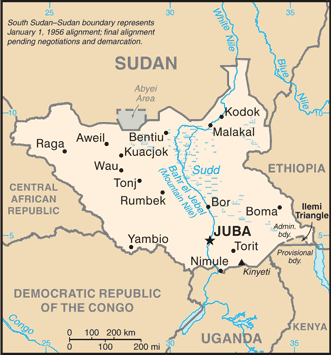
Map image could not be loaded. Open source image.
ⓘ
CIA World Factbook map, February 2021 media edition. Identity reviewed; current boundaries have not been audited. visual contact sheet or original identity check; does not verify current boundaries Boundaries, place names and designations may be dated or disputed; original annotations retained. SHA-256: dc04c5241d4de3e5b5f6a7afad614823221f3841321c9a22bbcf5f1f19191173. Provenance and inspection record.ⓘ
World Bank directory coordinates; approximate location, not a country center. Coordinate reference date is not supplied by the directory. Natural Earth 1:110m land (2022 source); simplified coastline, no political borders. Map source. Land SVG SHA-256: CF26056A39DC0A5B02F65704E279DFA86E77539A8387D0B2C92F907A67739E5E.Introduction
Background:1
South Sudan, which gained independence from Sudan in 2011, is the world’s newest country. Home to a diverse array of mainly Nilotic ethnolinguistic groups that settled in the territory in the 15th through 19th centuries, South Sudanese society is heavily dependent on seasonal migration and seasonal fluctuations in precipitation. Modern-day South Sudan was conquered first by Egypt and later ruled jointly by Egyptian-British colonial administrators in the late 19th century. Christian missionaries helped spread the English language and Christianity in the area, leading to significant cultural differences with the northern part of Sudan, where Arabic and Islam are dominant. When Sudan gained its independence in 1956, the southern region received assurances that it would participate fully in the political system. However, the Arab government in Khartoum reneged on its promises, prompting two periods of civil war (1955-1972 and 1983-2005) in which as many as 2.5 million people died -- mostly civilians -- due largely to starvation and drought. The second Sudanese civil war was one of the deadliest since WWII and left southern Sudanese society devastated. Peace talks resulted in a US-backed Comprehensive Peace Agreement in 2005, which granted the South six years of autonomy followed by a referendum on final status. The result of this referendum, held in 2011, was a vote of 98% in favor of secession.
Since independence, South Sudan has struggled to form a viable governing system and has been plagued by widespread corruption, political conflict, and communal violence. In 2013, conflict erupted between forces loyal to President Salva KIIR, a Dinka, and forces loyal to Vice President Riek MACHAR, a Nuer. The conflict quickly spread through the country along ethnic lines, killing tens of thousands and creating a humanitarian crisis with millions of South Sudanese displaced. KIIR and MACHAR signed a peace agreement in 2015 that created a Transitional Government of National Unity the next year. However, renewed fighting broke out in Juba between KIIR and MACHAR’s forces, plunging the country back into conflict and drawing in additional armed opposition groups. A "revitalized" peace agreement was signed in 2018, mostly ending the fighting and laying the groundwork for a unified national army, a transitional government, and elections. The transitional government was formed in 2020, when MACHAR returned to Juba as first vice president. Since 2020, implementation of the peace agreement has been stalled amid wrangling over power-sharing, which has contributed to an uptick in communal violence and the country’s worst food crisis since independence, with 7 of 11 million South Sudanese citizens in need of humanitarian assistance. The transitional period was extended an additional two years in 2022, pushing elections to late 2024.
Geography
Location:2
East-Central Africa; south of Sudan, north of Uganda and Kenya, west of Ethiopia
Geographic coordinates:3
8 00 N, 30 00 E
Map references:4
Africa
Area:5
Surface area: 646,883 square kilometers (2024)
Area - comparative:7
more than four times the size of Georgia; slightly smaller than Texas
Land boundaries:8
Coastline:9
0 km (landlocked)
Maritime claims:10
none (landlocked)
Climate:11
hot with seasonal rainfall influenced by the annual shift of the Inter-Tropical Convergence Zone; rainfall heaviest in upland areas of the south and diminishes to the north
Terrain:12
plains in the north and center rise to southern highlands along the border with Uganda and Kenya; the White Nile, flowing north out of the uplands of Central Africa, is the major geographic feature of the country; The Sudd (a name derived from floating vegetation that hinders navigation) is a large swampy area of more than 100,000 sq km fed by the waters of the White Nile that dominates the center of the country
Elevation:13
Natural resources:14
hydropower, fertile agricultural land, gold, diamonds, petroleum, hardwoods, limestone, iron ore, copper, chromium ore, zinc, tungsten, mica, silver
Land use:15
Irrigated land:16
1,000 sq km (2012)
Major rivers (by length in km):17
Nile (shared with Rwanda [s], Tanzania, Uganda, Sudan, and Egypt [m]) - 6,650 km
Major watersheds (area sq km):18
Population distribution:19
clusters found in urban areas, particularly in the western interior and around the White Nile, as shown in this population distribution map
Geography - note:20
landlocked; The Sudd is a vast swamp in the north central region of South Sudan, formed by the White Nile; its size is variable but can reach some 15% of the country's total area during the rainy season; it is one of the world's largest wetlands
People and Society
Population:21
Population: 12,188,788 people (2025)
Nationality:23
Ethnic groups:24
Dinka (Jieng) approximately 35-40%, Nuer (Naath) approximately 15%, Shilluk (Chollo), Azande, Bari, Kakwa, Kuku, Murle, Mandari, Didinga, Ndogo, Bviri, Lndi, Anuak, Bongo, Lango, Dungotona, Acholi, Baka, Fertit (2011 est.)
Languages:25
English (official), Arabic (includes Juba and Sudanese variants), ethnic languages include Dinka, Nuer, Bari, Zande, Shilluk
Religions:26
Christian 60.5%, folk religion 32.9%, Muslim 6.2%, other <1%, unaffiliated <1% (2020 est.)
Age structure:27
Dependency ratios:28
Median age:29
Population growth rate:30
Population growth rate: 2.03 % annually (2025)
4.65% (2024 est.)
Birth rate:32
Crude birth rate: 29.22 births per 1,000 people (2024)
36.4 births/1,000 population (2024 est.)
Death rate:34
Crude death rate: 9.82 deaths per 1,000 people (2024)
8.9 deaths/1,000 population (2024 est.)
Net migration rate:36
19.1 migrant(s)/1,000 population (2024 est.)
Population distribution:37
clusters found in urban areas, particularly in the western interior and around the White Nile, as shown in this population distribution map
Urbanization:38
Urban population: 21.68 % of population (2025)
Major urban areas - population:40
459,000 JUBA (capital) (2023)
Sex ratio:41
Maternal mortality ratio:42
Maternal mortality ratio: 692 deaths per 100,000 live births (2023)
692 deaths/100,000 live births (2023 est.)
Infant mortality rate:44
Infant mortality rate: 71.9 deaths per 1,000 live births (2024)
Life expectancy at birth:46
Life expectancy at birth: 57.74 years (2024)
Total fertility rate:48
Total fertility rate: 3.79 births per woman (2024)
5.09 children born/woman (2024 est.)
Gross reproduction rate:50
2.48 (2024 est.)
Drinking water source:51
At least basic drinking water services: 39.75 % of population (2024)
Health expenditure:53
Current health expenditure: 11.61 % of GDP (2023)
Physician density:55
Physicians: 0.04 per 1,000 people (2022)
0.04 physicians/1,000 population (2022)
Sanitation facility access:57
At least basic sanitation services: 14.43 % of population (2024)
Obesity - adult prevalence rate:59
6.6% (2014)
Currently married women (ages 15-49):60
72% (2023 est.)
Education expenditure:61
Environment
Environmental issues:62
water pollution; inadequate supplies of potable water; wildlife conservation and loss of biodiversity; deforestation; soil erosion; desertification; drought
International environmental agreements:63
Climate:64
hot with seasonal rainfall influenced by the annual shift of the Inter-Tropical Convergence Zone; rainfall heaviest in upland areas of the south and diminishes to the north
Land use:65
Urbanization:66
Carbon dioxide emissions:67
Particulate matter emissions:68
20.6 micrograms per cubic meter (2019 est.)
Methane emissions:69
Waste and recycling:70
Total water withdrawal:71
Total renewable water resources:72
49.5 billion cubic meters (2022 est.)
Government
Country name:73
Government type:74
presidential republic
Capital:75
Administrative divisions:76
10 states; Central Equatoria, Eastern Equatoria, Jonglei, Lakes, Northern Bahr el Ghazal, Unity, Upper Nile, Warrap, Western Bahr el Ghazal, Western Equatoria
Constitution:77
Citizenship:78
Suffrage:79
18 years of age; universal
Executive branch:80
Legislative branch:81
Legislative branch - lower chamber:82
Legislative branch - upper chamber:83
Judicial branch:84
Political parties:85
Democratic Change or DC
Democratic Forum or DF
Labour Party or LPSS
South Sudan Opposition Alliance or SSOA
Sudan African National Union or SANU
Sudan People's Liberation Movement or SPLM
Sudan People’s Liberation Movement-In Opposition or SPLM-IO
United Democratic Salvation Front or UDSF
United South Sudan African Party or USSAP
United South Sudan Party or USSP
Diplomatic representation in the US:86
Diplomatic representation from the US:87
International organization participation:88
AU, EAC, FAO, G-77, IBRD, ICAO, IDA, IFAD, IFC, IFRCS, IGAD, ILO, IMF, Interpol, IOM, IPU, ITU, MIGA, UN, UNCTAD, UNESCO, UPU, WCO, WHO, WMO
Independence:89
9 July 2011 (from Sudan)
National holiday:90
Independence Day, 9 July (2011)
Flag:91
National symbol(s):92
African fish eagle
National color(s):93
red, green, blue, yellow, black, white
National anthem(s):94
Economy
Economic overview:95
low-income, oil-based Sahelian economy; extreme poverty and food insecurity; COVID-19 and ongoing violence threaten socioeconomic potential; environmentally fragile; ongoing land and property rights issues; natural resource rich but lacks infrastructure
Real GDP (purchasing power parity):96
$6.752 billion (2023 est.)
$6.585 billion (2022 est.)
$6.945 billion (2021 est.)
Real GDP growth rate:97
-5.2% (2017 est.)
-13.9% (2016 est.)
-10.8% (2015 est.)
Real GDP per capita:98
GDP (official exchange rate):99
GDP: 11,997,800,760.22 current US dollars (2015)
$4.629 billion (2023 est.)
Inflation rate (consumer prices):101
GDP - composition, by sector of origin:102
Agricultural products:103
milk, cassava, sorghum, goat milk, vegetables, fruits, groundnuts, sesame seeds, beef, maize (2023)
Industrial production growth rate:104
-36.8% (2015 est.)
Labor force:105
5.091 million (2023 est.)
Unemployment rate:106
Youth unemployment rate (ages 15-24):107
Population below poverty line:108
82.3% (2016 est.)
Gini Index coefficient - distribution of family income:109
44 (2016 est.)
Household income or consumption by percentage share:110
Remittances:111
9.5% of GDP (2015 est.)
0% of GDP (2014 est.)
0% of GDP (2013 est.)
Budget:112
Public debt:113
86.6% of GDP (2016 est.)
Current account balance:114
$577.9 million (2023 est.)
-$596.748 million (2022 est.)
-$6.55 million (2021 est.)
Exports:115
$4.499 billion (2023 est.)
$5.811 billion (2022 est.)
$4.652 billion (2021 est.)
Exports - partners:116
China 51%, Singapore 29%, UAE 10%, Germany 4%, Uganda 3% (2023)
Exports - commodities:117
crude petroleum, refined petroleum, forage crops, gold, scrap iron (2023)
Imports:118
$4.443 billion (2023 est.)
$6.402 billion (2022 est.)
$4.037 billion (2021 est.)
Imports - partners:119
Uganda 33%, UAE 26%, Kenya 14%, China 10%, USA 3% (2023)
Imports - commodities:120
garments, cement, other foods, iron bars, cereal flours (2023)
Reserves of foreign exchange and gold:121
$72.881 million (2023 est.)
$94.914 million (2022 est.)
$341.932 million (2021 est.)
Exchange rates:122
2,163.104 (2024 est.)
930.331 (2023 est.)
534.511 (2022 est.)
306.355 (2021 est.)
165.907 (2020 est.)
Energy
Electricity access:123
Electricity:124
Electricity generation sources:125
Coal:126
Petroleum:127
Energy consumption per capita:128
Communications
Telephones - fixed lines:129
Telephones - mobile cellular:130
Broadcast media:131
1 state-controlled TV channel and radio station; several community and commercial FM stations, mostly sponsored by outside aid donors; some foreign radio broadcasts available (2019)
Internet country code:132
.ss
Internet users:133
Broadband - fixed subscriptions:134
Transportation
Civil aircraft registration country code prefix:135
Z8
Airports:136
89 (2025)
Heliports:137
2 (2025)
Railways:138
Military and Security
Military and security forces:139
South Sudan People’s Defense Force (SSPDF): Land Forces (includes Presidential Guard), Air Forces, Marine (Riverine) Forces, Reserve Forces; National (or Necessary) Unified Forces (NUF)
Ministry of Interior: South Sudan National Police Service (SSNPS) (2025)
note 2: numerous irregular forces operate in the country with official knowledge, including militias operated by the National Security Service (an internal security force under the Ministry of National Security) and proxy forces
Military expenditures:140
2% of GDP (2024 est.)
2% of GDP (2023 est.)
2% of GDP (2022 est.)
2% of GDP (2021 est.)
2% of GDP (2020 est.)
Military and security service personnel strengths:141
information varies; estimated 150-200,000 active Defense Forces (2025)
Military equipment inventories and acquisitions:142
the SSPDF inventory is comprised primarily of Soviet-era equipment; South Sudan has been under a UN arms embargo since 2018 (2024)
Military service age and obligation:143
18 is the legal minimum age for compulsory (men) and voluntary (men and women) military service; 12-24 months service (2023)
Military - note:144
the South Sudan People's Defense Forces (SSPDF) are largely focused on border and internal security; areas of concern include disputed national borders, conflict spillover from neighboring Sudan, banditry, and armed rebel groups and militias that continue to operate in the country since the civil war ended in 2020
the SSPDF, formerly the Sudan People’s Liberation Army (SPLA), was founded as a guerrilla movement against the Sudanese Government in 1983 and participated in the Second Sudanese Civil War (1983-2005); the Juba Declaration that followed the Comprehensive Peace Agreement of 2005 unified the SPLA and the South Sudan Defense Forces (SSDF), the second-largest rebel militia remaining from the civil war, under the SPLA name; in 2017, the SPLA was renamed the South Sudan Defense Forces (SSDF) and in September 2018 was renamed again as the SSPDF
the UN Mission in South Sudan (UNMISS) has operated in the country since 2011 with the objectives of consolidating peace and security and helping establish conditions for the successful economic and political development of South Sudan; UNMISS has about 18,000 personnel assigned; the UN Interim Security Force for Abyei (UNISFA) has operated in the disputed Abyei region along the border between Sudan and South Sudan since 2011; its mission includes ensuring security, protecting civilians, strengthening the capacity of the Abyei Police Service, de-mining, monitoring/verifying the redeployment of armed forces from the area, and facilitating the flow of humanitarian aid; UNISFA has approximately 3,800 personnel assigned (2025)
Transnational Issues
Refugees and internally displaced persons:145
Trafficking in persons:146
Additional observations
- Real GDP growth147
- -10.79 % annual change (2015)
- Consumer price inflation148
- 91.44 % annual change (2024)
- Unemployment (modeled ILO estimate)149
- 12.37 % of labor force (2023)
- Access to electricity150
- 5.4 % of population (2024)
- Renewable energy share of total final energy consumption151
- 32.4 % (2021)
- Individuals using the internet152
- 6.67 % of population (2019)
- Adult literacy rate153
- 26.83 % of people aged 15 and over (2008)
- Government education expenditure154
- 1.57 % of GDP (2016)
Notes & sources
- Background. Reference edition; observation: dates as stated in text. Field last updated: not supplied; profile fallback: 2025-12-04 09:22:22 -0500 (not a field revision date); needs review. Reference source. Edition last checked 2026-10-29 (retrieval only). ↩
- Location. Reference edition; observation: dates as stated in text. Field last updated: not supplied; profile fallback: 2025-12-04 09:22:22 -0500 (not a field revision date); needs review. Reference source. Edition last checked 2026-10-29 (retrieval only). ↩
- Geographic coordinates. Reference edition; observation: dates as stated in text. Field last updated: not supplied; profile fallback: 2025-12-04 09:22:22 -0500 (not a field revision date); needs review. Reference source. Edition last checked 2026-10-29 (retrieval only). ↩
- Map references. Reference edition; observation: dates as stated in text. Field last updated: not supplied; profile fallback: 2025-12-04 09:22:22 -0500 (not a field revision date); needs review. Reference source. Edition last checked 2026-10-29 (retrieval only). ↩
- Area. Reference edition; observation: dates as stated in text. Field last updated: not supplied; profile fallback: 2025-12-04 09:22:22 -0500 (not a field revision date); needs review. Reference source. The archived total area has no reference year and territorial coverage may differ from World Bank surface area. World Bank: 646,883 square kilometers (2024). Reference: 644,329 square kilometers. Edition last checked 2026-10-29 (retrieval only). ↩
- Surface area. Surface area: observation 2024; checked 2026-10-29; single source. World Bank World Development Indicators. The archived total area has no reference year and territorial coverage may differ from World Bank surface area. World Bank: 646,883 square kilometers (2024). Reference: 644,329 square kilometers. ↩
- Area - comparative. Reference edition; observation: dates as stated in text. Field last updated: not supplied; profile fallback: 2025-12-04 09:22:22 -0500 (not a field revision date); needs review. Reference source. Edition last checked 2026-10-29 (retrieval only). ↩
- Land boundaries. Reference edition; observation: dates as stated in text. Field last updated: not supplied; profile fallback: 2025-12-04 09:22:22 -0500 (not a field revision date); needs review. Reference source. Edition last checked 2026-10-29 (retrieval only). ↩
- Coastline. Reference edition; observation: dates as stated in text. Field last updated: not supplied; profile fallback: 2025-12-04 09:22:22 -0500 (not a field revision date); needs review. Reference source. Edition last checked 2026-10-29 (retrieval only). ↩
- Maritime claims. Reference edition; observation: dates as stated in text. Field last updated: not supplied; profile fallback: 2025-12-04 09:22:22 -0500 (not a field revision date); needs review. Reference source. Edition last checked 2026-10-29 (retrieval only). ↩
- Climate. Reference edition; observation: dates as stated in text. Field last updated: not supplied; profile fallback: 2025-12-04 09:22:22 -0500 (not a field revision date); needs review. Reference source. Edition last checked 2026-10-29 (retrieval only). ↩
- Terrain. Reference edition; observation: dates as stated in text. Field last updated: not supplied; profile fallback: 2025-12-04 09:22:22 -0500 (not a field revision date); needs review. Reference source. Edition last checked 2026-10-29 (retrieval only). ↩
- Elevation. Reference edition; observation: dates as stated in text. Field last updated: not supplied; profile fallback: 2025-12-04 09:22:22 -0500 (not a field revision date); needs review. Reference source. Edition last checked 2026-10-29 (retrieval only). ↩
- Natural resources. Reference edition; observation: dates as stated in text. Field last updated: not supplied; profile fallback: 2025-12-04 09:22:22 -0500 (not a field revision date); needs review. Reference source. Edition last checked 2026-10-29 (retrieval only). ↩
- Land use. Reference edition; observation: dates as stated in text. Field last updated: not supplied; profile fallback: 2025-12-04 09:22:22 -0500 (not a field revision date); needs review. Reference source. Edition last checked 2026-10-29 (retrieval only). ↩
- Irrigated land. Reference edition; observation: 2012. Field last updated: not supplied; profile fallback: 2025-12-04 09:22:22 -0500 (not a field revision date); needs review. Reference source. Edition last checked 2026-10-29 (retrieval only). ↩
- Major rivers (by length in km). Reference edition; observation: dates as stated in text. Field last updated: not supplied; profile fallback: 2025-12-04 09:22:22 -0500 (not a field revision date); needs review. Reference source. Edition last checked 2026-10-29 (retrieval only). ↩
- Major watersheds (area sq km). Reference edition; observation: dates as stated in text. Field last updated: not supplied; profile fallback: 2025-12-04 09:22:22 -0500 (not a field revision date); needs review. Reference source. Edition last checked 2026-10-29 (retrieval only). ↩
- Population distribution. Reference edition; observation: dates as stated in text. Field last updated: not supplied; profile fallback: 2025-12-04 09:22:22 -0500 (not a field revision date); needs review. Reference source. Edition last checked 2026-10-29 (retrieval only). ↩
- Geography - note. Reference edition; observation: dates as stated in text. Field last updated: not supplied; profile fallback: 2025-12-04 09:22:22 -0500 (not a field revision date); needs review. Reference source. Edition last checked 2026-10-29 (retrieval only). ↩
- Population. Reference edition; observation: dates as stated in text. Field last updated: not supplied; profile fallback: 2025-12-04 09:22:22 -0500 (not a field revision date); needs review. Reference source. Different reference years; no numerical agreement is asserted. World Bank: 12,188,788 people (2025). Reference: 12,703,714 people (2024). Edition last checked 2026-10-29 (retrieval only). ↩
- Population. Population: observation 2025; checked 2026-10-29; single source. World Bank World Development Indicators. Different reference years; no numerical agreement is asserted. World Bank: 12,188,788 people (2025). Reference: 12,703,714 people (2024). ↩
- Nationality. Reference edition; observation: dates as stated in text. Field last updated: not supplied; profile fallback: 2025-12-04 09:22:22 -0500 (not a field revision date); needs review. Reference source. Edition last checked 2026-10-29 (retrieval only). ↩
- Ethnic groups. Reference edition; observation: 2011 est.. Field last updated: not supplied; profile fallback: 2025-12-04 09:22:22 -0500 (not a field revision date); needs review. Reference source. Edition last checked 2026-10-29 (retrieval only). ↩
- Languages. Reference edition; observation: dates as stated in text. Field last updated: not supplied; profile fallback: 2025-12-04 09:22:22 -0500 (not a field revision date); needs review. Reference source. Edition last checked 2026-10-29 (retrieval only). ↩
- Religions. Reference edition; observation: 2020 est.. Field last updated: not supplied; profile fallback: 2025-12-04 09:22:22 -0500 (not a field revision date); needs review. Reference source. Edition last checked 2026-10-29 (retrieval only). ↩
- Age structure. Reference edition; observation: dates as stated in text. Field last updated: not supplied; profile fallback: 2025-12-04 09:22:22 -0500 (not a field revision date); needs review. Reference source. Edition last checked 2026-10-29 (retrieval only). ↩
- Dependency ratios. Reference edition; observation: dates as stated in text. Field last updated: not supplied; profile fallback: 2025-12-04 09:22:22 -0500 (not a field revision date); needs review. Reference source. Edition last checked 2026-10-29 (retrieval only). ↩
- Median age. Reference edition; observation: dates as stated in text. Field last updated: not supplied; profile fallback: 2025-12-04 09:22:22 -0500 (not a field revision date); needs review. Reference source. Edition last checked 2026-10-29 (retrieval only). ↩
- Population growth rate. Reference edition; observation: 2024. Field last updated: not supplied; profile fallback: 2025-12-04 09:22:22 -0500 (not a field revision date); needs review. Reference source. Edition last checked 2026-10-29 (retrieval only). ↩
- Population growth rate. Population growth rate: observation 2025; checked 2026-10-29; single source. World Bank World Development Indicators. Latest available World Bank series in 2020–2026; reference year is not retrieval year. May be modeled or revised; differing definitions and geography require review. No independent crosscheck; do not silently replace archived Factbook. ↩
- Birth rate. Reference edition; observation: 2024. Field last updated: not supplied; profile fallback: 2025-12-04 09:22:22 -0500 (not a field revision date); needs review. Reference source. Edition last checked 2026-10-29 (retrieval only). ↩
- Crude birth rate. Crude birth rate: observation 2024; checked 2026-10-29; single source. World Bank World Development Indicators. Latest available World Bank series in 2020–2026; reference year is not retrieval year. May be modeled or revised; differing definitions and geography require review. No independent crosscheck; do not silently replace archived Factbook. ↩
- Death rate. Reference edition; observation: 2024. Field last updated: not supplied; profile fallback: 2025-12-04 09:22:22 -0500 (not a field revision date); needs review. Reference source. Edition last checked 2026-10-29 (retrieval only). ↩
- Crude death rate. Crude death rate: observation 2024; checked 2026-10-29; single source. World Bank World Development Indicators. Latest available World Bank series in 2020–2026; reference year is not retrieval year. May be modeled or revised; differing definitions and geography require review. No independent crosscheck; do not silently replace archived Factbook. ↩
- Net migration rate. Reference edition; observation: 2024. Field last updated: not supplied; profile fallback: 2025-12-04 09:22:22 -0500 (not a field revision date); needs review. Reference source. Edition last checked 2026-10-29 (retrieval only). ↩
- Population distribution. Reference edition; observation: dates as stated in text. Field last updated: not supplied; profile fallback: 2025-12-04 09:22:22 -0500 (not a field revision date); needs review. Reference source. Edition last checked 2026-10-29 (retrieval only). ↩
- Urbanization. Reference edition; observation: dates as stated in text. Field last updated: not supplied; profile fallback: 2025-12-04 09:22:22 -0500 (not a field revision date); needs review. Reference source. Edition last checked 2026-10-29 (retrieval only). ↩
- Urban population. Urban population: observation 2025; checked 2026-10-29; single source. World Bank World Development Indicators. Latest available World Bank series in 2020–2026; reference year is not retrieval year. May be modeled or revised; differing definitions and geography require review. No independent crosscheck; do not silently replace archived Factbook. ↩
- Major urban areas - population. Reference edition; observation: 2023. Field last updated: not supplied; profile fallback: 2025-12-04 09:22:22 -0500 (not a field revision date); needs review. Reference source. Edition last checked 2026-10-29 (retrieval only). ↩
- Sex ratio. Reference edition; observation: dates as stated in text. Field last updated: not supplied; profile fallback: 2025-12-04 09:22:22 -0500 (not a field revision date); needs review. Reference source. Edition last checked 2026-10-29 (retrieval only). ↩
- Maternal mortality ratio. Reference edition; observation: 2023. Field last updated: not supplied; profile fallback: 2025-12-04 09:22:22 -0500 (not a field revision date); needs review. Reference source. Edition last checked 2026-10-29 (retrieval only). ↩
- Maternal mortality ratio. Maternal mortality ratio: observation 2023; checked 2026-10-29; single source. World Bank World Development Indicators. Latest available World Bank series in 2020–2026; reference year is not retrieval year. May be modeled or revised; differing definitions and geography require review. No independent crosscheck; do not silently replace archived Factbook. ↩
- Infant mortality rate. Reference edition; observation: dates as stated in text. Field last updated: not supplied; profile fallback: 2025-12-04 09:22:22 -0500 (not a field revision date); needs review. Reference source. Edition last checked 2026-10-29 (retrieval only). ↩
- Infant mortality rate. Infant mortality rate: observation 2024; checked 2026-10-29; single source. World Bank World Development Indicators. Latest available World Bank series in 2020–2026; reference year is not retrieval year. May be modeled or revised; differing definitions and geography require review. No independent crosscheck; do not silently replace archived Factbook. ↩
- Life expectancy at birth. Reference edition; observation: dates as stated in text. Field last updated: not supplied; profile fallback: 2025-12-04 09:22:22 -0500 (not a field revision date); needs review. Reference source. Edition last checked 2026-10-29 (retrieval only). ↩
- Life expectancy at birth. Life expectancy at birth: observation 2024; checked 2026-10-29; single source. World Bank World Development Indicators. Latest available World Bank series in 2020–2026; reference year is not retrieval year. May be modeled or revised; differing definitions and geography require review. No independent crosscheck; do not silently replace archived Factbook. ↩
- Total fertility rate. Reference edition; observation: 2024. Field last updated: not supplied; profile fallback: 2025-12-04 09:22:22 -0500 (not a field revision date); needs review. Reference source. Edition last checked 2026-10-29 (retrieval only). ↩
- Total fertility rate. Total fertility rate: observation 2024; checked 2026-10-29; single source. World Bank World Development Indicators. Latest available World Bank series in 2020–2026; reference year is not retrieval year. May be modeled or revised; differing definitions and geography require review. No independent crosscheck; do not silently replace archived Factbook. ↩
- Gross reproduction rate. Reference edition; observation: 2024. Field last updated: not supplied; profile fallback: 2025-12-04 09:22:22 -0500 (not a field revision date); needs review. Reference source. Edition last checked 2026-10-29 (retrieval only). ↩
- Drinking water source. Reference edition; observation: dates as stated in text. Field last updated: not supplied; profile fallback: 2025-12-04 09:22:22 -0500 (not a field revision date); needs review. Reference source. Edition last checked 2026-10-29 (retrieval only). ↩
- At least basic drinking water services. At least basic drinking water services: observation 2024; checked 2026-10-29; single source. World Bank World Development Indicators. Latest available World Bank series in 2020–2026; reference year is not retrieval year. May be modeled or revised; differing definitions and geography require review. No independent crosscheck; do not silently replace archived Factbook. This separately sourced basic-service observation is shown alongside the reference edition’s improved/unimproved categories. It does not replace those category totals. ↩
- Health expenditure. Reference edition; observation: dates as stated in text. Field last updated: not supplied; profile fallback: 2025-12-04 09:22:22 -0500 (not a field revision date); needs review. Reference source. Edition last checked 2026-10-29 (retrieval only). ↩
- Current health expenditure. Current health expenditure: observation 2023; checked 2026-10-29; single source. World Bank World Development Indicators. Latest available World Bank series in 2020–2026; reference year is not retrieval year. May be modeled or revised; differing definitions and geography require review. No independent crosscheck; do not silently replace archived Factbook. ↩
- Physician density. Reference edition; observation: 2022. Field last updated: not supplied; profile fallback: 2025-12-04 09:22:22 -0500 (not a field revision date); needs review. Reference source. Edition last checked 2026-10-29 (retrieval only). ↩
- Physicians. Physicians: observation 2022; checked 2026-10-29; single source. World Bank World Development Indicators. Latest available World Bank series in 2020–2026; reference year is not retrieval year. May be modeled or revised; differing definitions and geography require review. No independent crosscheck; do not silently replace archived Factbook. ↩
- Sanitation facility access. Reference edition; observation: dates as stated in text. Field last updated: not supplied; profile fallback: 2025-12-04 09:22:22 -0500 (not a field revision date); needs review. Reference source. Edition last checked 2026-10-29 (retrieval only). ↩
- At least basic sanitation services. At least basic sanitation services: observation 2024; checked 2026-10-29; single source. World Bank World Development Indicators. Latest available World Bank series in 2020–2026; reference year is not retrieval year. May be modeled or revised; differing definitions and geography require review. No independent crosscheck; do not silently replace archived Factbook. This separately sourced basic-service observation is shown alongside the reference edition’s improved/unimproved categories. It does not replace those category totals. ↩
- Obesity - adult prevalence rate. Reference edition; observation: 2014. Field last updated: not supplied; profile fallback: 2025-12-04 09:22:22 -0500 (not a field revision date); needs review. Reference source. Edition last checked 2026-10-29 (retrieval only). ↩
- Currently married women (ages 15-49). Reference edition; observation: 2023. Field last updated: not supplied; profile fallback: 2025-12-04 09:22:22 -0500 (not a field revision date); needs review. Reference source. Edition last checked 2026-10-29 (retrieval only). ↩
- Education expenditure. Reference edition; observation: dates as stated in text. Field last updated: not supplied; profile fallback: 2025-12-04 09:22:22 -0500 (not a field revision date); needs review. Reference source. Edition last checked 2026-10-29 (retrieval only). ↩
- Environmental issues. Reference edition; observation: dates as stated in text. Field last updated: not supplied; profile fallback: 2025-12-04 09:22:22 -0500 (not a field revision date); needs review. Reference source. Edition last checked 2026-10-29 (retrieval only). ↩
- International environmental agreements. Reference edition; observation: dates as stated in text. Field last updated: not supplied; profile fallback: 2025-12-04 09:22:22 -0500 (not a field revision date); needs review. Reference source. Edition last checked 2026-10-29 (retrieval only). ↩
- Climate. Reference edition; observation: dates as stated in text. Field last updated: not supplied; profile fallback: 2025-12-04 09:22:22 -0500 (not a field revision date); needs review. Reference source. Edition last checked 2026-10-29 (retrieval only). ↩
- Land use. Reference edition; observation: dates as stated in text. Field last updated: not supplied; profile fallback: 2025-12-04 09:22:22 -0500 (not a field revision date); needs review. Reference source. Edition last checked 2026-10-29 (retrieval only). ↩
- Urbanization. Reference edition; observation: dates as stated in text. Field last updated: not supplied; profile fallback: 2025-12-04 09:22:22 -0500 (not a field revision date); needs review. Reference source. Edition last checked 2026-10-29 (retrieval only). ↩
- Carbon dioxide emissions. Reference edition; observation: dates as stated in text. Field last updated: not supplied; profile fallback: 2025-12-04 09:22:22 -0500 (not a field revision date); needs review. Reference source. Edition last checked 2026-10-29 (retrieval only). ↩
- Particulate matter emissions. Reference edition; observation: 2019. Field last updated: not supplied; profile fallback: 2025-12-04 09:22:22 -0500 (not a field revision date); needs review. Reference source. Edition last checked 2026-10-29 (retrieval only). ↩
- Methane emissions. Reference edition; observation: dates as stated in text. Field last updated: not supplied; profile fallback: 2025-12-04 09:22:22 -0500 (not a field revision date); needs review. Reference source. Edition last checked 2026-10-29 (retrieval only). ↩
- Waste and recycling. Reference edition; observation: dates as stated in text. Field last updated: not supplied; profile fallback: 2025-12-04 09:22:22 -0500 (not a field revision date); needs review. Reference source. Edition last checked 2026-10-29 (retrieval only). ↩
- Total water withdrawal. Reference edition; observation: dates as stated in text. Field last updated: not supplied; profile fallback: 2025-12-04 09:22:22 -0500 (not a field revision date); needs review. Reference source. Edition last checked 2026-10-29 (retrieval only). ↩
- Total renewable water resources. Reference edition; observation: 2022. Field last updated: not supplied; profile fallback: 2025-12-04 09:22:22 -0500 (not a field revision date); needs review. Reference source. Edition last checked 2026-10-29 (retrieval only). ↩
- Country name. Reference edition; observation: dates as stated in text. Field last updated: not supplied; profile fallback: 2025-12-04 09:22:22 -0500 (not a field revision date); needs review. Reference source. Edition last checked 2026-10-29 (retrieval only). ↩
- Government type. Reference edition; observation: dates as stated in text. Field last updated: not supplied; profile fallback: 2025-12-04 09:22:22 -0500 (not a field revision date); needs review. Reference source. Edition last checked 2026-10-29 (retrieval only). ↩
- Capital. Reference edition; observation: dates as stated in text. Field last updated: not supplied; profile fallback: 2025-12-04 09:22:22 -0500 (not a field revision date); needs review. Reference source. Edition last checked 2026-10-29 (retrieval only). ↩
- Administrative divisions. Reference edition; observation: dates as stated in text. Field last updated: not supplied; profile fallback: 2025-12-04 09:22:22 -0500 (not a field revision date); needs review. Reference source. Edition last checked 2026-10-29 (retrieval only). ↩
- Constitution. Reference edition; observation: dates as stated in text. Field last updated: not supplied; profile fallback: 2025-12-04 09:22:22 -0500 (not a field revision date); needs review. Reference source. Edition last checked 2026-10-29 (retrieval only). ↩
- Citizenship. Reference edition; observation: dates as stated in text. Field last updated: not supplied; profile fallback: 2025-12-04 09:22:22 -0500 (not a field revision date); needs review. Reference source. Edition last checked 2026-10-29 (retrieval only). ↩
- Suffrage. Reference edition; observation: dates as stated in text. Field last updated: not supplied; profile fallback: 2025-12-04 09:22:22 -0500 (not a field revision date); needs review. Reference source. Edition last checked 2026-10-29 (retrieval only). ↩
- Executive branch. Reference edition; observation: dates as stated in text. Field last updated: not supplied; profile fallback: 2025-12-04 09:22:22 -0500 (not a field revision date); needs review. Reference source. Edition last checked 2026-10-29 (retrieval only). ↩
- Legislative branch. Reference edition; observation: dates as stated in text. Field last updated: not supplied; profile fallback: 2025-12-04 09:22:22 -0500 (not a field revision date); needs review. Reference source. Edition last checked 2026-10-29 (retrieval only). ↩
- Legislative branch - lower chamber. Reference edition; observation: dates as stated in text. Field last updated: not supplied; profile fallback: 2025-12-04 09:22:22 -0500 (not a field revision date); needs review. Reference source. Edition last checked 2026-10-29 (retrieval only). ↩
- Legislative branch - upper chamber. Reference edition; observation: dates as stated in text. Field last updated: not supplied; profile fallback: 2025-12-04 09:22:22 -0500 (not a field revision date); needs review. Reference source. Edition last checked 2026-10-29 (retrieval only). ↩
- Judicial branch. Reference edition; observation: dates as stated in text. Field last updated: not supplied; profile fallback: 2025-12-04 09:22:22 -0500 (not a field revision date); needs review. Reference source. Edition last checked 2026-10-29 (retrieval only). ↩
- Political parties. Reference edition; observation: dates as stated in text. Field last updated: not supplied; profile fallback: 2025-12-04 09:22:22 -0500 (not a field revision date); needs review. Reference source. Edition last checked 2026-10-29 (retrieval only). ↩
- Diplomatic representation in the US. Reference edition; observation: dates as stated in text. Field last updated: not supplied; profile fallback: 2025-12-04 09:22:22 -0500 (not a field revision date); needs review. Reference source. Edition last checked 2026-10-29 (retrieval only). ↩
- Diplomatic representation from the US. Reference edition; observation: dates as stated in text. Field last updated: not supplied; profile fallback: 2025-12-04 09:22:22 -0500 (not a field revision date); needs review. Reference source. Edition last checked 2026-10-29 (retrieval only). ↩
- International organization participation. Reference edition; observation: dates as stated in text. Field last updated: not supplied; profile fallback: 2025-12-04 09:22:22 -0500 (not a field revision date); needs review. Reference source. Edition last checked 2026-10-29 (retrieval only). ↩
- Independence. Reference edition; observation: dates as stated in text. Field last updated: not supplied; profile fallback: 2025-12-04 09:22:22 -0500 (not a field revision date); needs review. Reference source. Edition last checked 2026-10-29 (retrieval only). ↩
- National holiday. Reference edition; observation: dates as stated in text. Field last updated: not supplied; profile fallback: 2025-12-04 09:22:22 -0500 (not a field revision date); needs review. Reference source. Edition last checked 2026-10-29 (retrieval only). ↩
- Flag. Reference edition; observation: dates as stated in text. Field last updated: not supplied; profile fallback: 2025-12-04 09:22:22 -0500 (not a field revision date); needs review. Reference source. Edition last checked 2026-10-29 (retrieval only). ↩
- National symbol(s). Reference edition; observation: dates as stated in text. Field last updated: not supplied; profile fallback: 2025-12-04 09:22:22 -0500 (not a field revision date); needs review. Reference source. Edition last checked 2026-10-29 (retrieval only). ↩
- National color(s). Reference edition; observation: dates as stated in text. Field last updated: not supplied; profile fallback: 2025-12-04 09:22:22 -0500 (not a field revision date); needs review. Reference source. Edition last checked 2026-10-29 (retrieval only). ↩
- National anthem(s). Reference edition; observation: dates as stated in text. Field last updated: not supplied; profile fallback: 2025-12-04 09:22:22 -0500 (not a field revision date); needs review. Reference source. Edition last checked 2026-10-29 (retrieval only). ↩
- Economic overview. Reference edition; observation: dates as stated in text. Field last updated: not supplied; profile fallback: 2025-12-04 09:22:22 -0500 (not a field revision date); needs review. Reference source. Edition last checked 2026-10-29 (retrieval only). ↩
- Real GDP (purchasing power parity). Reference edition; observation: dates as stated in text. Field last updated: not supplied; profile fallback: 2025-12-04 09:22:22 -0500 (not a field revision date); needs review. Reference source. Edition last checked 2026-10-29 (retrieval only). ↩
- Real GDP growth rate. Reference edition; observation: dates as stated in text. Field last updated: not supplied; profile fallback: 2025-12-04 09:22:22 -0500 (not a field revision date); needs review. Reference source. Edition last checked 2026-10-29 (retrieval only). ↩
- Real GDP per capita. Reference edition; observation: dates as stated in text. Field last updated: not supplied; profile fallback: 2025-12-04 09:22:22 -0500 (not a field revision date); needs review. Reference source. Edition last checked 2026-10-29 (retrieval only). ↩
- GDP (official exchange rate). Reference edition; observation: 2023. Field last updated: not supplied; profile fallback: 2025-12-04 09:22:22 -0500 (not a field revision date); needs review. Reference source. Different reference years; no numerical agreement is asserted. World Bank: 11,997,800,760.22 current US dollars (2015). Reference: 4,629,000,000 current US dollars (2023). Edition last checked 2026-10-29 (retrieval only). ↩
- GDP. GDP: observation 2015; checked 2026-10-29; single source. World Bank World Development Indicators. Different reference years; no numerical agreement is asserted. World Bank: 11,997,800,760.22 current US dollars (2015). Reference: 4,629,000,000 current US dollars (2023). ↩
- Inflation rate (consumer prices). Reference edition; observation: dates as stated in text. Field last updated: not supplied; profile fallback: 2025-12-04 09:22:22 -0500 (not a field revision date); needs review. Reference source. Edition last checked 2026-10-29 (retrieval only). ↩
- GDP - composition, by sector of origin. Reference edition; observation: dates as stated in text. Field last updated: not supplied; profile fallback: 2025-12-04 09:22:22 -0500 (not a field revision date); needs review. Reference source. Edition last checked 2026-10-29 (retrieval only). ↩
- Agricultural products. Reference edition; observation: 2023. Field last updated: not supplied; profile fallback: 2025-12-04 09:22:22 -0500 (not a field revision date); needs review. Reference source. Edition last checked 2026-10-29 (retrieval only). ↩
- Industrial production growth rate. Reference edition; observation: 2015. Field last updated: not supplied; profile fallback: 2025-12-04 09:22:22 -0500 (not a field revision date); needs review. Reference source. Edition last checked 2026-10-29 (retrieval only). ↩
- Labor force. Reference edition; observation: 2023. Field last updated: not supplied; profile fallback: 2025-12-04 09:22:22 -0500 (not a field revision date); needs review. Reference source. Edition last checked 2026-10-29 (retrieval only). ↩
- Unemployment rate. Reference edition; observation: dates as stated in text. Field last updated: not supplied; profile fallback: 2025-12-04 09:22:22 -0500 (not a field revision date); needs review. Reference source. Edition last checked 2026-10-29 (retrieval only). ↩
- Youth unemployment rate (ages 15-24). Reference edition; observation: dates as stated in text. Field last updated: not supplied; profile fallback: 2025-12-04 09:22:22 -0500 (not a field revision date); needs review. Reference source. Edition last checked 2026-10-29 (retrieval only). ↩
- Population below poverty line. Reference edition; observation: 2016. Field last updated: not supplied; profile fallback: 2025-12-04 09:22:22 -0500 (not a field revision date); needs review. Reference source. Edition last checked 2026-10-29 (retrieval only). ↩
- Gini Index coefficient - distribution of family income. Reference edition; observation: dates as stated in text. Field last updated: not supplied; profile fallback: 2025-12-04 09:22:22 -0500 (not a field revision date); needs review. Reference source. Edition last checked 2026-10-29 (retrieval only). ↩
- Household income or consumption by percentage share. Reference edition; observation: dates as stated in text. Field last updated: not supplied; profile fallback: 2025-12-04 09:22:22 -0500 (not a field revision date); needs review. Reference source. Edition last checked 2026-10-29 (retrieval only). ↩
- Remittances. Reference edition; observation: dates as stated in text. Field last updated: not supplied; profile fallback: 2025-12-04 09:22:22 -0500 (not a field revision date); needs review. Reference source. Edition last checked 2026-10-29 (retrieval only). ↩
- Budget. Reference edition; observation: dates as stated in text. Field last updated: not supplied; profile fallback: 2025-12-04 09:22:22 -0500 (not a field revision date); needs review. Reference source. Edition last checked 2026-10-29 (retrieval only). ↩
- Public debt. Reference edition; observation: dates as stated in text. Field last updated: not supplied; profile fallback: 2025-12-04 09:22:22 -0500 (not a field revision date); needs review. Reference source. Edition last checked 2026-10-29 (retrieval only). ↩
- Current account balance. Reference edition; observation: dates as stated in text. Field last updated: not supplied; profile fallback: 2025-12-04 09:22:22 -0500 (not a field revision date); needs review. Reference source. Edition last checked 2026-10-29 (retrieval only). ↩
- Exports. Reference edition; observation: dates as stated in text. Field last updated: not supplied; profile fallback: 2025-12-04 09:22:22 -0500 (not a field revision date); needs review. Reference source. Edition last checked 2026-10-29 (retrieval only). ↩
- Exports - partners. Reference edition; observation: 2023. Field last updated: not supplied; profile fallback: 2025-12-04 09:22:22 -0500 (not a field revision date); needs review. Reference source. Edition last checked 2026-10-29 (retrieval only). ↩
- Exports - commodities. Reference edition; observation: 2023. Field last updated: not supplied; profile fallback: 2025-12-04 09:22:22 -0500 (not a field revision date); needs review. Reference source. Edition last checked 2026-10-29 (retrieval only). ↩
- Imports. Reference edition; observation: dates as stated in text. Field last updated: not supplied; profile fallback: 2025-12-04 09:22:22 -0500 (not a field revision date); needs review. Reference source. Edition last checked 2026-10-29 (retrieval only). ↩
- Imports - partners. Reference edition; observation: 2023. Field last updated: not supplied; profile fallback: 2025-12-04 09:22:22 -0500 (not a field revision date); needs review. Reference source. Edition last checked 2026-10-29 (retrieval only). ↩
- Imports - commodities. Reference edition; observation: 2023. Field last updated: not supplied; profile fallback: 2025-12-04 09:22:22 -0500 (not a field revision date); needs review. Reference source. Edition last checked 2026-10-29 (retrieval only). ↩
- Reserves of foreign exchange and gold. Reference edition; observation: dates as stated in text. Field last updated: not supplied; profile fallback: 2025-12-04 09:22:22 -0500 (not a field revision date); needs review. Reference source. Edition last checked 2026-10-29 (retrieval only). ↩
- Exchange rates. Reference edition; observation: dates as stated in text. Field last updated: not supplied; profile fallback: 2025-12-04 09:22:22 -0500 (not a field revision date); needs review. Reference source. Edition last checked 2026-10-29 (retrieval only). ↩
- Electricity access. Reference edition; observation: dates as stated in text. Field last updated: not supplied; profile fallback: 2025-12-04 09:22:22 -0500 (not a field revision date); needs review. Reference source. Edition last checked 2026-10-29 (retrieval only). ↩
- Electricity. Reference edition; observation: dates as stated in text. Field last updated: not supplied; profile fallback: 2025-12-04 09:22:22 -0500 (not a field revision date); needs review. Reference source. Edition last checked 2026-10-29 (retrieval only). ↩
- Electricity generation sources. Reference edition; observation: dates as stated in text. Field last updated: not supplied; profile fallback: 2025-12-04 09:22:22 -0500 (not a field revision date); needs review. Reference source. Edition last checked 2026-10-29 (retrieval only). ↩
- Coal. Reference edition; observation: dates as stated in text. Field last updated: not supplied; profile fallback: 2025-12-04 09:22:22 -0500 (not a field revision date); needs review. Reference source. Edition last checked 2026-10-29 (retrieval only). ↩
- Petroleum. Reference edition; observation: dates as stated in text. Field last updated: not supplied; profile fallback: 2025-12-04 09:22:22 -0500 (not a field revision date); needs review. Reference source. Edition last checked 2026-10-29 (retrieval only). ↩
- Energy consumption per capita. Reference edition; observation: dates as stated in text. Field last updated: not supplied; profile fallback: 2025-12-04 09:22:22 -0500 (not a field revision date); needs review. Reference source. Edition last checked 2026-10-29 (retrieval only). ↩
- Telephones - fixed lines. Reference edition; observation: dates as stated in text. Field last updated: not supplied; profile fallback: 2025-12-04 09:22:22 -0500 (not a field revision date); needs review. Reference source. Edition last checked 2026-10-29 (retrieval only). ↩
- Telephones - mobile cellular. Reference edition; observation: dates as stated in text. Field last updated: not supplied; profile fallback: 2025-12-04 09:22:22 -0500 (not a field revision date); needs review. Reference source. Edition last checked 2026-10-29 (retrieval only). ↩
- Broadcast media. Reference edition; observation: 2019. Field last updated: not supplied; profile fallback: 2025-12-04 09:22:22 -0500 (not a field revision date); needs review. Reference source. Edition last checked 2026-10-29 (retrieval only). ↩
- Internet country code. Reference edition; observation: dates as stated in text. Field last updated: not supplied; profile fallback: 2025-12-04 09:22:22 -0500 (not a field revision date); needs review. Reference source. Edition last checked 2026-10-29 (retrieval only). ↩
- Internet users. Reference edition; observation: dates as stated in text. Field last updated: not supplied; profile fallback: 2025-12-04 09:22:22 -0500 (not a field revision date); needs review. Reference source. Edition last checked 2026-10-29 (retrieval only). ↩
- Broadband - fixed subscriptions. Reference edition; observation: dates as stated in text. Field last updated: not supplied; profile fallback: 2025-12-04 09:22:22 -0500 (not a field revision date); needs review. Reference source. Edition last checked 2026-10-29 (retrieval only). ↩
- Civil aircraft registration country code prefix. Reference edition; observation: dates as stated in text. Field last updated: not supplied; profile fallback: 2025-12-04 09:22:22 -0500 (not a field revision date); needs review. Reference source. Edition last checked 2026-10-29 (retrieval only). ↩
- Airports. Reference edition; observation: 2025. Field last updated: not supplied; profile fallback: 2025-12-04 09:22:22 -0500 (not a field revision date); needs review. Reference source. Edition last checked 2026-10-29 (retrieval only). ↩
- Heliports. Reference edition; observation: 2025. Field last updated: not supplied; profile fallback: 2025-12-04 09:22:22 -0500 (not a field revision date); needs review. Reference source. Edition last checked 2026-10-29 (retrieval only). ↩
- Railways. Reference edition; observation: dates as stated in text. Field last updated: not supplied; profile fallback: 2025-12-04 09:22:22 -0500 (not a field revision date); needs review. Reference source. Edition last checked 2026-10-29 (retrieval only). ↩
- Military and security forces. Reference edition; observation: 2025. Field last updated: not supplied; profile fallback: 2025-12-04 09:22:22 -0500 (not a field revision date); needs review. Reference source. Edition last checked 2026-10-29 (retrieval only). ↩
- Military expenditures. Reference edition; observation: dates as stated in text. Field last updated: not supplied; profile fallback: 2025-12-04 09:22:22 -0500 (not a field revision date); needs review. Reference source. Edition last checked 2026-10-29 (retrieval only). ↩
- Military and security service personnel strengths. Reference edition; observation: 2025. Field last updated: not supplied; profile fallback: 2025-12-04 09:22:22 -0500 (not a field revision date); needs review. Reference source. Edition last checked 2026-10-29 (retrieval only). ↩
- Military equipment inventories and acquisitions. Reference edition; observation: 2024. Field last updated: not supplied; profile fallback: 2025-12-04 09:22:22 -0500 (not a field revision date); needs review. Reference source. Edition last checked 2026-10-29 (retrieval only). ↩
- Military service age and obligation. Reference edition; observation: 2023. Field last updated: not supplied; profile fallback: 2025-12-04 09:22:22 -0500 (not a field revision date); needs review. Reference source. Edition last checked 2026-10-29 (retrieval only). ↩
- Military - note. Reference edition; observation: 2025. Field last updated: not supplied; profile fallback: 2025-12-04 09:22:22 -0500 (not a field revision date); needs review. Reference source. Edition last checked 2026-10-29 (retrieval only). ↩
- Refugees and internally displaced persons. Reference edition; observation: dates as stated in text. Field last updated: not supplied; profile fallback: 2025-12-04 09:22:22 -0500 (not a field revision date); needs review. Reference source. Edition last checked 2026-10-29 (retrieval only). ↩
- Trafficking in persons. Reference edition; observation: dates as stated in text. Field last updated: not supplied; profile fallback: 2025-12-04 09:22:22 -0500 (not a field revision date); needs review. Reference source. Edition last checked 2026-10-29 (retrieval only). ↩
- Real GDP growth. Real GDP growth: observation 2015; checked 2026-10-29; single source. World Bank World Development Indicators. Gross domestic product is the total income earned through the production of goods and services in an economic territory during an accounting period. It can be measured in three different ways: using either the expenditure approach, the income approach, or the production approach. This indicator denotes the percentage change over each previous year of the constant price (base year 2015) series in United States dollars. Source metadata: https://api.worldbank.org/v2/indicator/NY.GDP.MKTP.KD.ZG?format=json ↩
- Consumer price inflation. Consumer price inflation: observation 2024; checked 2026-10-29; single source. World Bank World Development Indicators. Inflation as measured by the consumer price index reflects the annual percentage change in the cost to the average consumer of acquiring a basket of goods and services that may be fixed or changed at specified intervals, such as yearly. Source metadata: https://api.worldbank.org/v2/indicator/FP.CPI.TOTL.ZG?format=json ↩
- Unemployment (modeled ILO estimate). Unemployment (modeled ILO estimate): observation 2023; checked 2026-10-29; single source. World Bank World Development Indicators. Unemployment refers to the share of the labor force that is without work but available for and seeking employment. The ILO modeled estimate is not necessarily directly comparable with national unemployment measures. Source metadata: https://api.worldbank.org/v2/indicator/SL.UEM.TOTL.ZS?format=json ↩
- Access to electricity. Access to electricity: observation 2024; checked 2026-10-29; single source. World Bank World Development Indicators. Access to electricity is the percentage of population with access to electricity. Electrification data are collected from industry, national surveys and international sources. Source metadata: https://api.worldbank.org/v2/indicator/EG.ELC.ACCS.ZS?format=json ↩
- Renewable energy share of total final energy consumption. Renewable energy share of total final energy consumption: observation 2021; checked 2026-10-29; single source. World Bank World Development Indicators. Renewable energy consumption is the share of renewable energy in total final energy consumption. Source metadata: https://api.worldbank.org/v2/indicator/EG.FEC.RNEW.ZS?format=json ↩
- Individuals using the internet. Individuals using the internet: observation 2019; checked 2026-10-29; single source. World Bank World Development Indicators. Internet users are individuals who have used the Internet (from any location) in the last 3 months. The Internet can be used via a computer, mobile phone, personal digital assistant, games machine, digital TV etc. Source metadata: https://api.worldbank.org/v2/indicator/IT.NET.USER.ZS?format=json ↩
- Adult literacy rate. Adult literacy rate: observation 2008; checked 2026-10-29; primary source checked. World Bank World Development Indicators. Primary source checked 2026-10-29T20:26:34.422Z. provider release 2026-10-08. source organization Data API, UN Educational, Scientific and Cultural Organization (UNESCO), uri: https://databrowser.uis.unesco.org/resources, note: The data are obtained through the UIS API. Detailed documentation is available at: https://api.uis.unesco.org/api/public/documentation/, publisher: UNESCO Institute for Statistics (UIS), type: Excel (bulk file), date accessed: 2026-03-19, date published: 2026-02. definition Literacy rate, adult total (% of people ages 15 and above). Original provider-reported country/economy series; unchanged historical boundaries are not asserted. Checked original WDI publication and metadata, not independent corroboration. ↩
- Government education expenditure. Government education expenditure: observation 2016; checked 2026-10-29; primary source checked. World Bank World Development Indicators. Primary source checked 2026-10-29T20:26:27.691Z. provider release 2026-10-08. source organization Data API, UN Educational, Scientific and Cultural Organization (UNESCO), uri: https://databrowser.uis.unesco.org/resources, note: The data are obtained through the UIS API. Detailed documentation is available at: https://api.uis.unesco.org/api/public/documentation/, publisher: UNESCO Institute for Statistics (UIS), date accessed: 2026-03-19, date published: 2026-02. definition Government expenditure on education, total (% of GDP). Original provider-reported country/economy series; unchanged historical boundaries are not asserted. Checked original WDI publication and metadata, not independent corroboration. ↩