South Asia / IND
India

ⓘ
2021 Factbook flag mirror; image identity has not been individually audited. Source.
Last updated: October 29, 2026
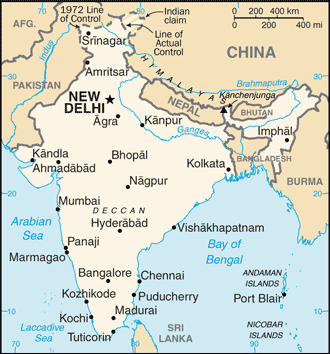
Map image could not be loaded. Open source image.
ⓘ
CIA World Factbook map, February 2021 media edition. Identity reviewed; current boundaries have not been audited. visual contact sheet or original identity check; does not verify current boundaries Boundaries, place names and designations may be dated or disputed; original annotations retained. SHA-256: f80e8e2abe7a42b4a020c22f2621eb310382210145ef318d5d4b0f3c8ba653f7. Provenance and inspection record.ⓘ
World Bank directory coordinates; approximate location, not a country center. Coordinate reference date is not supplied by the directory. Natural Earth 1:110m land (2022 source); simplified coastline, no political borders. Map source. Land SVG SHA-256: CF26056A39DC0A5B02F65704E279DFA86E77539A8387D0B2C92F907A67739E5E.Introduction
Background:1
The Indus Valley civilization, one of the world's oldest, flourished during the 3rd and 2nd millennia B.C. and extended into northwestern India. Aryan tribes from the northwest infiltrated the Indian subcontinent about 1500 B.C.; their merger with the earlier Dravidian inhabitants created the classical Indian culture. The Maurya Empire of the 4th and 3rd centuries B.C. -- which reached its zenith under ASHOKA -- united much of South Asia. The Gupta dynasty (4th to 6th centuries A.D.) ushered in The Golden Age, which saw a flowering of Indian science, art, and culture. Islam spread across the subcontinent over a period of 700 years. In the 10th and 11th centuries, Turks and Afghans invaded India and established the Delhi Sultanate. In the early 16th century, the Emperor BABUR established the Mughal Dynasty, which ruled large sections of India for more than three centuries. European explorers began establishing footholds in India during the 16th century.
By the 19th century, Great Britain had become the dominant political power on the subcontinent, and India was seen as the "Jewel in the Crown" of the British Empire. The British Indian Army played a vital role in both World Wars. Years of nonviolent resistance to British rule, led by Mohandas GANDHI and Jawaharlal NEHRU, eventually resulted in Indian independence in 1947. Large-scale communal violence took place before and after the subcontinent partition into two separate states -- India and Pakistan. The neighboring countries have fought three wars since independence, the last of which was in 1971 and resulted in East Pakistan becoming the separate nation of Bangladesh. India's nuclear weapons tests in 1998 emboldened Pakistan to conduct its own tests that same year. In 2008, terrorists originating from Pakistan conducted a series of coordinated attacks in Mumbai, India's financial capital. India's economic growth after economic reforms in 1991, a massive youth population, and a strategic geographic location have contributed to the country's emergence as a regional and global power. However, India still faces pressing problems such as extensive poverty, widespread corruption, and environmental degradation, and its restrictive business climate challenges economic growth expectations.
Geography
Location:2
Southern Asia, bordering the Arabian Sea and the Bay of Bengal, between Burma and Pakistan
Geographic coordinates:3
20 00 N, 77 00 E
Map references:4
Asia
Area:5
Surface area: 3,287,263 square kilometers (2024)
Area - comparative:7
slightly more than one-third the size of the US
Land boundaries:8
Coastline:9
7,000 km
Maritime claims:10
Climate:11
varies from tropical monsoon in south to temperate in north
Terrain:12
upland plain (Deccan Plateau) in south, flat to rolling plain along the Ganges, deserts in west, Himalayas in north
Elevation:13
Natural resources:14
coal (fourth-largest reserves in the world), antimony, iron ore, lead, manganese, mica, bauxite, rare earth elements, titanium ore, chromite, natural gas, diamonds, petroleum, limestone, arable land
Land use:15
Irrigated land:16
754,562 sq km (2022)
Major lakes (area sq km):17
Major rivers (by length in km):18
Brahmaputra (shared with China [s] and Bangladesh [m]) - 3,969 km; Indus (shared with China [s] and Pakistan [m]) - 3,610 km; Ganges river source (shared with Bangladesh [m]) - 2,704 km; Godavari - 1,465 km; Sutlej (shared with China [s] and Pakistan [m]) - 1,372 km; Yamuna - 1,370 km; Narmada - 1,289 km; Chenab river source (shared with Pakistan [m]) - 1,086 km ; Ghaghara river mouth (shared with China [s] and Nepal) - 1,080 km
Major watersheds (area sq km):19
Major aquifers:20
Indus-Ganges-Brahmaputra Basin
Population distribution:21
a very high population density exists throughout most of the country, with the notable exception of the deserts in the northwest and the mountain fringe in the north; the core of the population is in the north along the banks of the Ganges, with other river valleys and southern coastal areas also having large population concentrations
Natural hazards:22
droughts; flash floods, as well as widespread and destructive flooding from monsoonal rains; severe thunderstorms; earthquakes
Geography - note:23
dominates South Asian subcontinent; near important Indian Ocean trade routes; Kanchenjunga, third tallest mountain in the world, lies on the border with Nepal
People and Society
Population:24
Population: 1,463,865,525 people (2025)
Nationality:26
Ethnic groups:27
Indo-Aryan 72%, Dravidian 25%, and other 3% (2000)
Languages:28
Hindi 43.6%, Bengali 8%, Marathi 6.9%, Telugu 6.7%, Tamil 5.7%, Gujarati 4.6%, Urdu 4.2%, Kannada 3.6%, Odia 3.1%, Malayalam 2.9%, Punjabi 2.7%, Assamese 1.3%, Maithili 1.1%, other 5.6%; English is the subsidiary official language but is the most important one for national, political, and commercial communication (2011 est.)
Religions:29
Hindu 79.8%, Muslim 14.2%, Christian 2.3%, Sikh 1.7%, other and unspecified 2% (2011 est.)
Age structure:30
Dependency ratios:31
Median age:32
Population growth rate:33
Population growth rate: 0.89 % annually (2025)
0.72% (2024 est.)
Birth rate:35
Crude birth rate: 15.98 births per 1,000 people (2024)
16.2 births/1,000 population (2024 est.)
Death rate:37
Crude death rate: 6.59 deaths per 1,000 people (2024)
9.1 deaths/1,000 population (2024 est.)
Net migration rate:39
0.1 migrant(s)/1,000 population (2024 est.)
Population distribution:40
a very high population density exists throughout most of the country, with the notable exception of the deserts in the northwest and the mountain fringe in the north; the core of the population is in the north along the banks of the Ganges, with other river valleys and southern coastal areas also having large population concentrations
Urbanization:41
Urban population: 35.69 % of population (2025)
Major urban areas - population:43
32.941 million NEW DELHI (capital), 21.297 million Mumbai, 15.333 million Kolkata, 13.608 million Bangalore, 11.776 million Chennai, 10.801 million Hyderabad (2023)
Sex ratio:44
Mother's mean age at first birth:45
21.2 years (2019/21)
Maternal mortality ratio:46
Maternal mortality ratio: 80 deaths per 100,000 live births (2023)
80 deaths/100,000 live births (2023 est.)
Infant mortality rate:48
Infant mortality rate: 23.3 deaths per 1,000 live births (2024)
Life expectancy at birth:50
Life expectancy at birth: 72.24 years (2024)
Total fertility rate:52
Total fertility rate: 1.96 births per woman (2024)
2.03 children born/woman (2024 est.)
Gross reproduction rate:54
0.97 (2024 est.)
Drinking water source:55
At least basic drinking water services: 95.72 % of population (2024)
Health expenditure:57
Current health expenditure: 3.34 % of GDP (2023)
Physician density:59
Physicians: 0.72 per 1,000 people (2020)
0.72 physicians/1,000 population (2020)
Hospital bed density:61
1.6 beds/1,000 population (2021 est.)
Sanitation facility access:62
At least basic sanitation services: 83.38 % of population (2024)
Obesity - adult prevalence rate:64
3.9% (2016)
Alcohol consumption per capita:65
Tobacco use:66
Children under the age of 5 years underweight:67
31.5% (2020 est.)
Currently married women (ages 15-49):68
72.6% (2023 est.)
Child marriage:69
Education expenditure:70
Government education expenditure: 4.1 % of GDP (2022)
Literacy:72
Adult literacy rate: 78.16 % of people aged 15 and over (2024)
School life expectancy (primary to tertiary education):74
Environment
Environmental issues:75
deforestation; soil erosion; overgrazing; desertification; air pollution from industrial effluents and vehicle emissions; water pollution from raw sewage and agricultural pesticides; tap water not potable; growing population overstraining natural resources; biodiversity loss
International environmental agreements:76
Climate:77
varies from tropical monsoon in south to temperate in north
Land use:78
Urbanization:79
Carbon dioxide emissions:80
Particulate matter emissions:81
55.6 micrograms per cubic meter (2019 est.)
Methane emissions:82
Waste and recycling:83
Total water withdrawal:84
Total renewable water resources:85
1.911 trillion cubic meters (2022 est.)
Government
Country name:86
Government type:87
federal parliamentary republic
Capital:88
Administrative divisions:89
28 states and 8 union territories*; Andaman and Nicobar Islands*, Andhra Pradesh, Arunachal Pradesh, Assam, Bihar, Chandigarh*, Chhattisgarh, Dadra and Nagar Haveli and Daman and Diu*, Delhi*, Goa, Gujarat, Haryana, Himachal Pradesh, Jammu and Kashmir*, Jharkhand, Karnataka, Kerala, Ladakh*, Lakshadweep*, Madhya Pradesh, Maharashtra, Manipur, Meghalaya, Mizoram, Nagaland, Odisha, Puducherry*, Punjab, Rajasthan, Sikkim, Tamil Nadu, Telangana, Tripura, Uttar Pradesh, Uttarakhand, West Bengal
Legal system:90
common law system based on the English model; separate personal law codes apply to Muslims, Christians, and Hindus; judicial review of legislative acts
Constitution:91
International law organization participation:92
accepts compulsory ICJ jurisdiction with reservations; non-party state to the ICCt
Citizenship:93
Suffrage:94
18 years of age; universal
Executive branch:95
Legislative branch:96
Legislative branch - lower chamber:97
Legislative branch - upper chamber:98
Judicial branch:99
Political parties:100
Aam Aadmi Party or AAP
All India Trinamool Congress or AITC
Bahujan Samaj Party or BSP
Bharatiya Janata Party or BJP
Biju Janata Dal or BJD
Communist Party of India-Marxist or CPI(M)
Dravida Munnetra Khazhagam
Indian National Congress or INC
Nationalist Congress Party or NCP
Rashtriya Janata Dal or RJD
Samajwadi Party or SP
Shiromani Akali Dal or SAD
Shiv Sena or SS
Telegana Rashtra Samithi or TRS
Telugu Desam Party or TDP
YSR Congress or YSRCP or YCP
Diplomatic representation in the US:101
Diplomatic representation from the US:102
International organization participation:103
ADB, AfDB (nonregional member), Arctic Council (observer), ARF, ASEAN (dialogue partner), BIMSTEC, BIS, BRICS, C, CD, CERN (observer), CICA, CP, EAS, FAO, FATF, G-15, G-20, G-24, G-5, G-77, IAEA, IBRD, ICAO, ICC (national committees), ICRM, IDA, IFAD, IFC, IFRCS, IHO, ILO, IMF, IMO, IMSO, Interpol, IOC, IOM, IPU, ISO, ITSO, ITU, ITUC (NGOs), LAS (observer), MIGA, MINURSO, MONUSCO, NAM, OAS (observer), OECD, OPCW, Pacific Alliance (observer), PCA, PIF (partner), Quad, SAARC, SACEP, SCO (observer), UN, UNCTAD, UNDOF, UNESCO, UNHCR, UNHRC, UNIDO, UNIFIL, UNISFA, UNITAR, UNMISS, UNOCI, UNOOSA, UNSOM, UNWTO, UPU, Wassenaar Arrangement, WCO, WFTU (NGOs), WHO, WIPO, WMO, WTO
Independence:104
15 August 1947 (from the UK)
National holiday:105
Republic Day, 26 January (1950)
Flag:106
National symbol(s):107
the Lion Capital of Ashoka, which depicts four Asiatic lions standing back-to-back and mounted on a circular abacus (official); Bengal tiger and lotus flower (traditional)
National color(s):108
saffron, white, green
National anthem(s):109
National heritage:110
Economy
Economic overview:111
largest South Asian economy; strong, sustained GDP growth led by technology and service sectors, foreign investment, and improved regulatory framework; high poverty rate and income inequality; initiatives on infrastructure development, digitization, manufacturing, and financial access
Real GDP (purchasing power parity):112
$14.244 trillion (2024 est.)
$13.377 trillion (2023 est.)
$12.251 trillion (2022 est.)
Real GDP growth rate:113
6.5% (2024 est.)
9.2% (2023 est.)
7.6% (2022 est.)
Real GDP per capita:114
GDP (official exchange rate):115
GDP: 3,956,067,115,771.63 current US dollars (2025)
$3.913 trillion (2024 est.)
Inflation rate (consumer prices):117
GDP - composition, by sector of origin:118
GDP - composition, by end use:119
Agricultural products:120
sugarcane, rice, milk, wheat, bison milk, potatoes, vegetables, maize, bananas, onions (2023)
Industries:121
textiles, chemicals, food processing, steel, transportation equipment, cement, mining, petroleum, machinery, software, pharmaceuticals
Industrial production growth rate:122
5.6% (2024 est.)
Labor force:123
607.691 million (2024 est.)
Unemployment rate:124
Youth unemployment rate (ages 15-24):125
Gini Index coefficient - distribution of family income:126
25.5 (2022 est.)
Average household expenditures:127
Household income or consumption by percentage share:128
Remittances:129
3.5% of GDP (2024 est.)
3.3% of GDP (2023 est.)
3.3% of GDP (2022 est.)
Budget:130
Public debt:131
46.5% of GDP (2018 est.)
Taxes and other revenues:132
6.7% (of GDP) (2022 est.)
Current account balance:133
-$32.428 billion (2024 est.)
-$31.962 billion (2023 est.)
-$79.051 billion (2022 est.)
Exports:134
$822.046 billion (2024 est.)
$773.177 billion (2023 est.)
$767.643 billion (2022 est.)
Exports - partners:135
USA 19%, UAE 7%, China 4%, Germany 3%, UK 3% (2023)
Exports - commodities:136
refined petroleum, packaged medicine, diamonds, broadcasting equipment, garments (2023)
Imports:137
$923.081 billion (2024 est.)
$859.507 billion (2023 est.)
$902.304 billion (2022 est.)
Imports - partners:138
China 19%, Russia 10%, USA 6%, UAE 6%, Saudi Arabia 5% (2023)
Imports - commodities:139
crude petroleum, gold, coal, natural gas, integrated circuits (2023)
Reserves of foreign exchange and gold:140
$643.043 billion (2024 est.)
$627.793 billion (2023 est.)
$567.298 billion (2022 est.)
Debt - external:141
$212.728 billion (2023 est.)
Exchange rates:142
83.669 (2024 est.)
82.599 (2023 est.)
78.604 (2022 est.)
73.918 (2021 est.)
74.1 (2020 est.)
Energy
Electricity access:143
Electricity:144
Electricity generation sources:145
Nuclear energy:146
Coal:147
Petroleum:148
Natural gas:149
Energy consumption per capita:150
Communications
Telephones - fixed lines:151
Telephones - mobile cellular:152
Broadcast media:153
Doordarshan, India's public TV network, has a monopoly on terrestrial broadcasting and operates about 20 national, regional, and local services; a large number of privately owned TV stations are distributed by cable and satellite service providers; cable and satellite TV offer over 850 TV channels; government controls AM radio, with All India Radio operating domestic and external networks; news broadcasts via radio are limited to the All India Radio Network; since 2000, privately owned FM stations have been permitted and have increased rapidly (2020)
Internet country code:154
.in
Internet users:155
Broadband - fixed subscriptions:156
Transportation
Civil aircraft registration country code prefix:157
VT
Airports:158
315 (2025)
Heliports:159
289 (2025)
Railways:160
Merchant marine:161
Ports:162
Military and Security
Military and security forces:163
Indian Armed Forces (IAF): Army, Navy, Air Force, Coast Guard
Ministry of Home Affairs: Central Police Organization, Central Armed Police Forces (includes Assam Rifles, Border Security Force, Central Industrial Security Force, Central Reserve Police Force, Indo-Tibetan Border Police, National Security Guards, Sashastra Seema Bal) (2025)
Military expenditures:164
2% of GDP (2024 est.)
2.3% of GDP (2023 est.)
2.1% of GDP (2022 est.)
2.2% of GDP (2021 est.)
2.5% of GDP (2020 est.)
Military and security service personnel strengths:165
information varies; approximately 1.5 million active Indian Armed Forces, including about 1.25 million in the Army (2025)
Military equipment inventories and acquisitions:166
much of the military's inventory consists of Russian- and Soviet-origin equipment along with a smaller, but growing mix of Western and domestically produced arms; Russia continues to be the leading provider of arms to India, although in recent years India has increased acquisitions from other suppliers, including France, Israel, and the US; India's defense industry is capable of producing a range of air, land, missile, and naval weapons systems for both domestic use and export; it also produces weapons systems under license (2024)
Military service age and obligation:167
ages vary by service, but generally 16.5-27 years of age for voluntary military service for men and women; no conscription (2023)
Military deployments:168
1,100 Democratic Republic of the Congo (MONUSCO); 200 Golan Heights (UNDOF); 900 Lebanon (UNIFIL); 2,400 South Sudan (UNMISS); 600 Sudan (UNISFA) (2025)
Military - note:169
the Indian military's primary mission is external/territorial defense while secondary missions include regional power projection, UN peacekeeping deployments, humanitarian operations, and support to internal security forces; it participates in multinational exercises and is one of the world's largest contributors to UN peacekeeping operations
the military's chief external focuses are China and Pakistan; the short 1962 Sino-India War left in place one of the World’s longest disputed international borders--known as the Line of Actual Control (LAC)--resulting in occasional standoffs between Indian and Chinese security forces, including lethal clashes in 1975 and 2020; naval competition and influence in the Indian Ocean is also an area of interest
India has fought four wars and several skirmishes with Pakistan; three of the wars have been over the disputed region of Jammu and Kashmir, the status of which has been unsettled since the UK's 1947 withdrawal and the partition and independence of India and Pakistan; a fragile cease-fire in Kashmir was reached in 2003, revised in 2018, and reaffirmed in 2021, although the militarized Line of Control which serves as the border remains contested, and India has accused Pakistan of backing armed separatists and terrorist organizations in Jammu and Kashmir where Indian military and security forces have conducted counterinsurgency operations since the 1980s; in the Spring of 2025, India held Pakistan responsible for a terrorist attack in India-controlled Kashmir and retaliated, sparking a brief cross-border conflict involving aircraft, artillery, drone, and missile strikes
the Kashmir dispute also includes the Siachen Glacier, located in the Karakoram Mountain Range, which was seized by India in 1984 with Pakistan attempting to retake the area several times between 1985 and 1995; despite the 2003 cease-fire, both sides continue to maintain a permanent military presence there with outposts at altitudes above 20,000 feet (over 6,000 meters) where most casualties are due to extreme weather and the hazards of operating in the high mountain terrain of the world’s highest conflict, including avalanches, exposure, and altitude sickness (2025)
Space
Space agency/agencies:170
Indian Space Research Organization (ISRO; originally established in 1962 as the Indian National Committee for Space Research (INCOSPAR); renamed ISRO in 1969); Defense Space Agency (DSA; established 2019) (2025)
Space launch site(s):171
Satish Dhawan Space Center (aka Sriharikota Range; located in Andhra Pradesh); Vikram Sarabhai Space Center (Kerala) (2025)
Space program overview:172
has one of the world’s largest space programs; designs, builds, launches, operates, and tracks the full spectrum of satellites, including communications, navigation, remote sensing (RS), and scientific/technology; designs, builds, and launches rockets, space/satellite launch vehicles (SLVs), and lunar/interplanetary probes; launches satellites for foreign partners; researching and developing additional technologies and capabilities; developing astronaut program and human flight capabilities (with assistance from Russia and the US); has space-related agreements with the ESA and more than 50 countries, including China, France, Germany, Japan, Russia, and the US; participates in international projects such as the Square Kilometer Array radio telescope; the Department of Space administers two government-controlled space industry corporations; has a growing private space sector (2025)
Key space-program milestones:173
1963 - first sounding (research) rocket launched
1975 - first domestically made scientific satellite (Aryabhata) launched by Soviet Union
1979 - first experimental remote sensing (RS) satellite (Bhaskara-I) launched by Soviet Union
1980 - first successful launch of satellite (Rohini) on Indian satellite launch vehicle (SLV)
1984 - first Indian in space on a Soviet rocket
1988 - first operational RS satellite (IRS-1A) launched by Soviet Union
1994 - first successful launch of Polar Satellite Launch Vehicle (PSLV), India’s premier SLV
2008 - first lunar orbiter/probe (Chandrayaan-1) launched, reached lunar orbit, and sent a probe to the surface of the Moon
2014 - first interplanetary probe (Mangalyaan) reached orbit around Mars
2018 - Indian Regional Navigation Satellite System (INRSS) became operational
2019 - launched lunar orbiter/probe (Chandrayaan-2) with lander and rover (lander lost when it crash-landed on Moon’s surface)
2023 - successfully landed uncrewed lander/rover mission (Chandrayaan-3) on Moon's surface
2024 - launched satellite (XPoSat) to study black holes and placed solar observatory spacecraft (Aditya-L1) in orbital position to study the Sun
2025 - first docking of two orbiting satellites and sent its first astronaut to the International Space Station
Terrorism
Terrorist group(s):174
al-Qa’ida; al-Qa’ida in the Indian Subcontinent (AQIS); Harakat ul-Mujahidin; Harakat ul-Jihad-i-Islami (HUJI); Hizbul Mujahideen; Indian Mujahedeen; Islamic State of Iraq and ash-Sham (ISIS) – India (ISI); Jaish-e-Mohammed (JeM); Lashkar-e Tayyiba (LeT); Islamic Revolutionary Guard Corps (IRGC)/Qods Force; The Resistance Front (TRF)
Transnational Issues
Additional observations
- Real GDP growth177
- 7.57 % annual change (2025)
- Consumer price inflation178
- 2.4 % annual change (2025)
- Unemployment (modeled ILO estimate)179
- 4.22 % of labor force (2025)
- Access to electricity180
- 99.9 % of population (2024)
- Renewable energy share of total final energy consumption181
- 34.9 % (2021)
- Individuals using the internet182
- 70 % of population (2025)
Notes & sources
- Background. Reference edition; observation: dates as stated in text. Field last updated: not supplied; profile fallback: 2025-12-05 07:02:20 -0500 (not a field revision date); needs review. Reference source. Edition last checked 2026-10-29 (retrieval only). ↩
- Location. Reference edition; observation: dates as stated in text. Field last updated: not supplied; profile fallback: 2025-12-05 07:02:20 -0500 (not a field revision date); needs review. Reference source. Edition last checked 2026-10-29 (retrieval only). ↩
- Geographic coordinates. Reference edition; observation: dates as stated in text. Field last updated: not supplied; profile fallback: 2025-12-05 07:02:20 -0500 (not a field revision date); needs review. Reference source. Edition last checked 2026-10-29 (retrieval only). ↩
- Map references. Reference edition; observation: dates as stated in text. Field last updated: not supplied; profile fallback: 2025-12-05 07:02:20 -0500 (not a field revision date); needs review. Reference source. Edition last checked 2026-10-29 (retrieval only). ↩
- Area. Reference edition; observation: dates as stated in text. Field last updated: not supplied; profile fallback: 2025-12-05 07:02:20 -0500 (not a field revision date); needs review. Reference source. The archived total area has no reference year and territorial coverage may differ from World Bank surface area. World Bank: 3,287,263 square kilometers (2024). Reference: 3,287,263 square kilometers. Edition last checked 2026-10-29 (retrieval only). ↩
- Surface area. Surface area: observation 2024; checked 2026-10-29; single source. World Bank World Development Indicators. The archived total area has no reference year and territorial coverage may differ from World Bank surface area. World Bank: 3,287,263 square kilometers (2024). Reference: 3,287,263 square kilometers. ↩
- Area - comparative. Reference edition; observation: dates as stated in text. Field last updated: not supplied; profile fallback: 2025-12-05 07:02:20 -0500 (not a field revision date); needs review. Reference source. Edition last checked 2026-10-29 (retrieval only). ↩
- Land boundaries. Reference edition; observation: dates as stated in text. Field last updated: not supplied; profile fallback: 2025-12-05 07:02:20 -0500 (not a field revision date); needs review. Reference source. Edition last checked 2026-10-29 (retrieval only). ↩
- Coastline. Reference edition; observation: dates as stated in text. Field last updated: not supplied; profile fallback: 2025-12-05 07:02:20 -0500 (not a field revision date); needs review. Reference source. Edition last checked 2026-10-29 (retrieval only). ↩
- Maritime claims. Reference edition; observation: dates as stated in text. Field last updated: not supplied; profile fallback: 2025-12-05 07:02:20 -0500 (not a field revision date); needs review. Reference source. Edition last checked 2026-10-29 (retrieval only). ↩
- Climate. Reference edition; observation: dates as stated in text. Field last updated: not supplied; profile fallback: 2025-12-05 07:02:20 -0500 (not a field revision date); needs review. Reference source. Edition last checked 2026-10-29 (retrieval only). ↩
- Terrain. Reference edition; observation: dates as stated in text. Field last updated: not supplied; profile fallback: 2025-12-05 07:02:20 -0500 (not a field revision date); needs review. Reference source. Edition last checked 2026-10-29 (retrieval only). ↩
- Elevation. Reference edition; observation: dates as stated in text. Field last updated: not supplied; profile fallback: 2025-12-05 07:02:20 -0500 (not a field revision date); needs review. Reference source. Edition last checked 2026-10-29 (retrieval only). ↩
- Natural resources. Reference edition; observation: dates as stated in text. Field last updated: not supplied; profile fallback: 2025-12-05 07:02:20 -0500 (not a field revision date); needs review. Reference source. Edition last checked 2026-10-29 (retrieval only). ↩
- Land use. Reference edition; observation: dates as stated in text. Field last updated: not supplied; profile fallback: 2025-12-05 07:02:20 -0500 (not a field revision date); needs review. Reference source. Edition last checked 2026-10-29 (retrieval only). ↩
- Irrigated land. Reference edition; observation: 2022. Field last updated: not supplied; profile fallback: 2025-12-05 07:02:20 -0500 (not a field revision date); needs review. Reference source. Edition last checked 2026-10-29 (retrieval only). ↩
- Major lakes (area sq km). Reference edition; observation: dates as stated in text. Field last updated: not supplied; profile fallback: 2025-12-05 07:02:20 -0500 (not a field revision date); needs review. Reference source. Edition last checked 2026-10-29 (retrieval only). ↩
- Major rivers (by length in km). Reference edition; observation: dates as stated in text. Field last updated: not supplied; profile fallback: 2025-12-05 07:02:20 -0500 (not a field revision date); needs review. Reference source. Edition last checked 2026-10-29 (retrieval only). ↩
- Major watersheds (area sq km). Reference edition; observation: dates as stated in text. Field last updated: not supplied; profile fallback: 2025-12-05 07:02:20 -0500 (not a field revision date); needs review. Reference source. Edition last checked 2026-10-29 (retrieval only). ↩
- Major aquifers. Reference edition; observation: dates as stated in text. Field last updated: not supplied; profile fallback: 2025-12-05 07:02:20 -0500 (not a field revision date); needs review. Reference source. Edition last checked 2026-10-29 (retrieval only). ↩
- Population distribution. Reference edition; observation: dates as stated in text. Field last updated: not supplied; profile fallback: 2025-12-05 07:02:20 -0500 (not a field revision date); needs review. Reference source. Edition last checked 2026-10-29 (retrieval only). ↩
- Natural hazards. Reference edition; observation: dates as stated in text. Field last updated: not supplied; profile fallback: 2025-12-05 07:02:20 -0500 (not a field revision date); needs review. Reference source. Edition last checked 2026-10-29 (retrieval only). ↩
- Geography - note. Reference edition; observation: dates as stated in text. Field last updated: not supplied; profile fallback: 2025-12-05 07:02:20 -0500 (not a field revision date); needs review. Reference source. Edition last checked 2026-10-29 (retrieval only). ↩
- Population. Reference edition; observation: dates as stated in text. Field last updated: not supplied; profile fallback: 2025-12-05 07:02:20 -0500 (not a field revision date); needs review. Reference source. Different reference years; no numerical agreement is asserted. World Bank: 1,463,865,525 people (2025). Reference: 1,409,128,296 people (2024). Edition last checked 2026-10-29 (retrieval only). ↩
- Population. Population: observation 2025; checked 2026-10-29; single source. World Bank World Development Indicators. Different reference years; no numerical agreement is asserted. World Bank: 1,463,865,525 people (2025). Reference: 1,409,128,296 people (2024). ↩
- Nationality. Reference edition; observation: dates as stated in text. Field last updated: not supplied; profile fallback: 2025-12-05 07:02:20 -0500 (not a field revision date); needs review. Reference source. Edition last checked 2026-10-29 (retrieval only). ↩
- Ethnic groups. Reference edition; observation: 2000. Field last updated: not supplied; profile fallback: 2025-12-05 07:02:20 -0500 (not a field revision date); needs review. Reference source. Edition last checked 2026-10-29 (retrieval only). ↩
- Languages. Reference edition; observation: dates as stated in text. Field last updated: not supplied; profile fallback: 2025-12-05 07:02:20 -0500 (not a field revision date); needs review. Reference source. Edition last checked 2026-10-29 (retrieval only). ↩
- Religions. Reference edition; observation: 2011 est.. Field last updated: not supplied; profile fallback: 2025-12-05 07:02:20 -0500 (not a field revision date); needs review. Reference source. Edition last checked 2026-10-29 (retrieval only). ↩
- Age structure. Reference edition; observation: dates as stated in text. Field last updated: not supplied; profile fallback: 2025-12-05 07:02:20 -0500 (not a field revision date); needs review. Reference source. Edition last checked 2026-10-29 (retrieval only). ↩
- Dependency ratios. Reference edition; observation: dates as stated in text. Field last updated: not supplied; profile fallback: 2025-12-05 07:02:20 -0500 (not a field revision date); needs review. Reference source. Edition last checked 2026-10-29 (retrieval only). ↩
- Median age. Reference edition; observation: dates as stated in text. Field last updated: not supplied; profile fallback: 2025-12-05 07:02:20 -0500 (not a field revision date); needs review. Reference source. Edition last checked 2026-10-29 (retrieval only). ↩
- Population growth rate. Reference edition; observation: 2024. Field last updated: not supplied; profile fallback: 2025-12-05 07:02:20 -0500 (not a field revision date); needs review. Reference source. Edition last checked 2026-10-29 (retrieval only). ↩
- Population growth rate. Population growth rate: observation 2025; checked 2026-10-29; single source. World Bank World Development Indicators. Latest available World Bank series in 2020–2026; reference year is not retrieval year. May be modeled or revised; differing definitions and geography require review. No independent crosscheck; do not silently replace archived Factbook. ↩
- Birth rate. Reference edition; observation: 2024. Field last updated: not supplied; profile fallback: 2025-12-05 07:02:20 -0500 (not a field revision date); needs review. Reference source. Edition last checked 2026-10-29 (retrieval only). ↩
- Crude birth rate. Crude birth rate: observation 2024; checked 2026-10-29; single source. World Bank World Development Indicators. Latest available World Bank series in 2020–2026; reference year is not retrieval year. May be modeled or revised; differing definitions and geography require review. No independent crosscheck; do not silently replace archived Factbook. ↩
- Death rate. Reference edition; observation: 2024. Field last updated: not supplied; profile fallback: 2025-12-05 07:02:20 -0500 (not a field revision date); needs review. Reference source. Edition last checked 2026-10-29 (retrieval only). ↩
- Crude death rate. Crude death rate: observation 2024; checked 2026-10-29; single source. World Bank World Development Indicators. Latest available World Bank series in 2020–2026; reference year is not retrieval year. May be modeled or revised; differing definitions and geography require review. No independent crosscheck; do not silently replace archived Factbook. ↩
- Net migration rate. Reference edition; observation: 2024. Field last updated: not supplied; profile fallback: 2025-12-05 07:02:20 -0500 (not a field revision date); needs review. Reference source. Edition last checked 2026-10-29 (retrieval only). ↩
- Population distribution. Reference edition; observation: dates as stated in text. Field last updated: not supplied; profile fallback: 2025-12-05 07:02:20 -0500 (not a field revision date); needs review. Reference source. Edition last checked 2026-10-29 (retrieval only). ↩
- Urbanization. Reference edition; observation: dates as stated in text. Field last updated: not supplied; profile fallback: 2025-12-05 07:02:20 -0500 (not a field revision date); needs review. Reference source. Edition last checked 2026-10-29 (retrieval only). ↩
- Urban population. Urban population: observation 2025; checked 2026-10-29; single source. World Bank World Development Indicators. Latest available World Bank series in 2020–2026; reference year is not retrieval year. May be modeled or revised; differing definitions and geography require review. No independent crosscheck; do not silently replace archived Factbook. ↩
- Major urban areas - population. Reference edition; observation: 2023. Field last updated: not supplied; profile fallback: 2025-12-05 07:02:20 -0500 (not a field revision date); needs review. Reference source. Edition last checked 2026-10-29 (retrieval only). ↩
- Sex ratio. Reference edition; observation: dates as stated in text. Field last updated: not supplied; profile fallback: 2025-12-05 07:02:20 -0500 (not a field revision date); needs review. Reference source. Edition last checked 2026-10-29 (retrieval only). ↩
- Mother's mean age at first birth. Reference edition; observation: 2019/21. Field last updated: not supplied; profile fallback: 2025-12-05 07:02:20 -0500 (not a field revision date); needs review. Reference source. Edition last checked 2026-10-29 (retrieval only). ↩
- Maternal mortality ratio. Reference edition; observation: 2023. Field last updated: not supplied; profile fallback: 2025-12-05 07:02:20 -0500 (not a field revision date); needs review. Reference source. Edition last checked 2026-10-29 (retrieval only). ↩
- Maternal mortality ratio. Maternal mortality ratio: observation 2023; checked 2026-10-29; single source. World Bank World Development Indicators. Latest available World Bank series in 2020–2026; reference year is not retrieval year. May be modeled or revised; differing definitions and geography require review. No independent crosscheck; do not silently replace archived Factbook. ↩
- Infant mortality rate. Reference edition; observation: dates as stated in text. Field last updated: not supplied; profile fallback: 2025-12-05 07:02:20 -0500 (not a field revision date); needs review. Reference source. Edition last checked 2026-10-29 (retrieval only). ↩
- Infant mortality rate. Infant mortality rate: observation 2024; checked 2026-10-29; single source. World Bank World Development Indicators. Latest available World Bank series in 2020–2026; reference year is not retrieval year. May be modeled or revised; differing definitions and geography require review. No independent crosscheck; do not silently replace archived Factbook. ↩
- Life expectancy at birth. Reference edition; observation: dates as stated in text. Field last updated: not supplied; profile fallback: 2025-12-05 07:02:20 -0500 (not a field revision date); needs review. Reference source. Edition last checked 2026-10-29 (retrieval only). ↩
- Life expectancy at birth. Life expectancy at birth: observation 2024; checked 2026-10-29; single source. World Bank World Development Indicators. Latest available World Bank series in 2020–2026; reference year is not retrieval year. May be modeled or revised; differing definitions and geography require review. No independent crosscheck; do not silently replace archived Factbook. ↩
- Total fertility rate. Reference edition; observation: 2024. Field last updated: not supplied; profile fallback: 2025-12-05 07:02:20 -0500 (not a field revision date); needs review. Reference source. Edition last checked 2026-10-29 (retrieval only). ↩
- Total fertility rate. Total fertility rate: observation 2024; checked 2026-10-29; single source. World Bank World Development Indicators. Latest available World Bank series in 2020–2026; reference year is not retrieval year. May be modeled or revised; differing definitions and geography require review. No independent crosscheck; do not silently replace archived Factbook. ↩
- Gross reproduction rate. Reference edition; observation: 2024. Field last updated: not supplied; profile fallback: 2025-12-05 07:02:20 -0500 (not a field revision date); needs review. Reference source. Edition last checked 2026-10-29 (retrieval only). ↩
- Drinking water source. Reference edition; observation: dates as stated in text. Field last updated: not supplied; profile fallback: 2025-12-05 07:02:20 -0500 (not a field revision date); needs review. Reference source. Edition last checked 2026-10-29 (retrieval only). ↩
- At least basic drinking water services. At least basic drinking water services: observation 2024; checked 2026-10-29; single source. World Bank World Development Indicators. Latest available World Bank series in 2020–2026; reference year is not retrieval year. May be modeled or revised; differing definitions and geography require review. No independent crosscheck; do not silently replace archived Factbook. This separately sourced basic-service observation is shown alongside the reference edition’s improved/unimproved categories. It does not replace those category totals. ↩
- Health expenditure. Reference edition; observation: dates as stated in text. Field last updated: not supplied; profile fallback: 2025-12-05 07:02:20 -0500 (not a field revision date); needs review. Reference source. Edition last checked 2026-10-29 (retrieval only). ↩
- Current health expenditure. Current health expenditure: observation 2023; checked 2026-10-29; single source. World Bank World Development Indicators. Latest available World Bank series in 2020–2026; reference year is not retrieval year. May be modeled or revised; differing definitions and geography require review. No independent crosscheck; do not silently replace archived Factbook. ↩
- Physician density. Reference edition; observation: 2020. Field last updated: not supplied; profile fallback: 2025-12-05 07:02:20 -0500 (not a field revision date); needs review. Reference source. Edition last checked 2026-10-29 (retrieval only). ↩
- Physicians. Physicians: observation 2020; checked 2026-10-29; single source. World Bank World Development Indicators. Latest available World Bank series in 2020–2026; reference year is not retrieval year. May be modeled or revised; differing definitions and geography require review. No independent crosscheck; do not silently replace archived Factbook. ↩
- Hospital bed density. Reference edition; observation: 2021. Field last updated: not supplied; profile fallback: 2025-12-05 07:02:20 -0500 (not a field revision date); needs review. Reference source. Edition last checked 2026-10-29 (retrieval only). ↩
- Sanitation facility access. Reference edition; observation: dates as stated in text. Field last updated: not supplied; profile fallback: 2025-12-05 07:02:20 -0500 (not a field revision date); needs review. Reference source. Edition last checked 2026-10-29 (retrieval only). ↩
- At least basic sanitation services. At least basic sanitation services: observation 2024; checked 2026-10-29; single source. World Bank World Development Indicators. Latest available World Bank series in 2020–2026; reference year is not retrieval year. May be modeled or revised; differing definitions and geography require review. No independent crosscheck; do not silently replace archived Factbook. This separately sourced basic-service observation is shown alongside the reference edition’s improved/unimproved categories. It does not replace those category totals. ↩
- Obesity - adult prevalence rate. Reference edition; observation: 2016. Field last updated: not supplied; profile fallback: 2025-12-05 07:02:20 -0500 (not a field revision date); needs review. Reference source. Edition last checked 2026-10-29 (retrieval only). ↩
- Alcohol consumption per capita. Reference edition; observation: dates as stated in text. Field last updated: not supplied; profile fallback: 2025-12-05 07:02:20 -0500 (not a field revision date); needs review. Reference source. Edition last checked 2026-10-29 (retrieval only). ↩
- Tobacco use. Reference edition; observation: dates as stated in text. Field last updated: not supplied; profile fallback: 2025-12-05 07:02:20 -0500 (not a field revision date); needs review. Reference source. Edition last checked 2026-10-29 (retrieval only). ↩
- Children under the age of 5 years underweight. Reference edition; observation: 2020. Field last updated: not supplied; profile fallback: 2025-12-05 07:02:20 -0500 (not a field revision date); needs review. Reference source. Edition last checked 2026-10-29 (retrieval only). ↩
- Currently married women (ages 15-49). Reference edition; observation: 2023. Field last updated: not supplied; profile fallback: 2025-12-05 07:02:20 -0500 (not a field revision date); needs review. Reference source. Edition last checked 2026-10-29 (retrieval only). ↩
- Child marriage. Reference edition; observation: dates as stated in text. Field last updated: not supplied; profile fallback: 2025-12-05 07:02:20 -0500 (not a field revision date); needs review. Reference source. Edition last checked 2026-10-29 (retrieval only). ↩
- Education expenditure. Reference edition; observation: dates as stated in text. Field last updated: not supplied; profile fallback: 2025-12-05 07:02:20 -0500 (not a field revision date); needs review. Reference source. Edition last checked 2026-10-29 (retrieval only). ↩
- Government education expenditure. Government education expenditure: observation 2022; checked 2026-10-29; single source. World Bank World Development Indicators. Latest available World Bank series in 2020–2026; reference year is not retrieval year. May be modeled or revised; differing definitions and geography require review. No independent crosscheck; do not silently replace archived Factbook. ↩
- Literacy. Reference edition; observation: dates as stated in text. Field last updated: not supplied; profile fallback: 2025-12-05 07:02:20 -0500 (not a field revision date); needs review. Reference source. Edition last checked 2026-10-29 (retrieval only). ↩
- Adult literacy rate. Adult literacy rate: observation 2024; checked 2026-10-29; single source. World Bank World Development Indicators. Latest available World Bank series in 2020–2026; reference year is not retrieval year. May be modeled or revised; differing definitions and geography require review. No independent crosscheck; do not silently replace archived Factbook. ↩
- School life expectancy (primary to tertiary education). Reference edition; observation: dates as stated in text. Field last updated: not supplied; profile fallback: 2025-12-05 07:02:20 -0500 (not a field revision date); needs review. Reference source. Edition last checked 2026-10-29 (retrieval only). ↩
- Environmental issues. Reference edition; observation: dates as stated in text. Field last updated: not supplied; profile fallback: 2025-12-05 07:02:20 -0500 (not a field revision date); needs review. Reference source. Edition last checked 2026-10-29 (retrieval only). ↩
- International environmental agreements. Reference edition; observation: dates as stated in text. Field last updated: not supplied; profile fallback: 2025-12-05 07:02:20 -0500 (not a field revision date); needs review. Reference source. Edition last checked 2026-10-29 (retrieval only). ↩
- Climate. Reference edition; observation: dates as stated in text. Field last updated: not supplied; profile fallback: 2025-12-05 07:02:20 -0500 (not a field revision date); needs review. Reference source. Edition last checked 2026-10-29 (retrieval only). ↩
- Land use. Reference edition; observation: dates as stated in text. Field last updated: not supplied; profile fallback: 2025-12-05 07:02:20 -0500 (not a field revision date); needs review. Reference source. Edition last checked 2026-10-29 (retrieval only). ↩
- Urbanization. Reference edition; observation: dates as stated in text. Field last updated: not supplied; profile fallback: 2025-12-05 07:02:20 -0500 (not a field revision date); needs review. Reference source. Edition last checked 2026-10-29 (retrieval only). ↩
- Carbon dioxide emissions. Reference edition; observation: dates as stated in text. Field last updated: not supplied; profile fallback: 2025-12-05 07:02:20 -0500 (not a field revision date); needs review. Reference source. Edition last checked 2026-10-29 (retrieval only). ↩
- Particulate matter emissions. Reference edition; observation: 2019. Field last updated: not supplied; profile fallback: 2025-12-05 07:02:20 -0500 (not a field revision date); needs review. Reference source. Edition last checked 2026-10-29 (retrieval only). ↩
- Methane emissions. Reference edition; observation: dates as stated in text. Field last updated: not supplied; profile fallback: 2025-12-05 07:02:20 -0500 (not a field revision date); needs review. Reference source. Edition last checked 2026-10-29 (retrieval only). ↩
- Waste and recycling. Reference edition; observation: dates as stated in text. Field last updated: not supplied; profile fallback: 2025-12-05 07:02:20 -0500 (not a field revision date); needs review. Reference source. Edition last checked 2026-10-29 (retrieval only). ↩
- Total water withdrawal. Reference edition; observation: dates as stated in text. Field last updated: not supplied; profile fallback: 2025-12-05 07:02:20 -0500 (not a field revision date); needs review. Reference source. Edition last checked 2026-10-29 (retrieval only). ↩
- Total renewable water resources. Reference edition; observation: 2022. Field last updated: not supplied; profile fallback: 2025-12-05 07:02:20 -0500 (not a field revision date); needs review. Reference source. Edition last checked 2026-10-29 (retrieval only). ↩
- Country name. Reference edition; observation: dates as stated in text. Field last updated: not supplied; profile fallback: 2025-12-05 07:02:20 -0500 (not a field revision date); needs review. Reference source. Edition last checked 2026-10-29 (retrieval only). ↩
- Government type. Reference edition; observation: dates as stated in text. Field last updated: not supplied; profile fallback: 2025-12-05 07:02:20 -0500 (not a field revision date); needs review. Reference source. Edition last checked 2026-10-29 (retrieval only). ↩
- Capital. Reference edition; observation: dates as stated in text. Field last updated: not supplied; profile fallback: 2025-12-05 07:02:20 -0500 (not a field revision date); needs review. Reference source. Edition last checked 2026-10-29 (retrieval only). ↩
- Administrative divisions. Reference edition; observation: dates as stated in text. Field last updated: not supplied; profile fallback: 2025-12-05 07:02:20 -0500 (not a field revision date); needs review. Reference source. Edition last checked 2026-10-29 (retrieval only). ↩
- Legal system. Reference edition; observation: dates as stated in text. Field last updated: not supplied; profile fallback: 2025-12-05 07:02:20 -0500 (not a field revision date); needs review. Reference source. Edition last checked 2026-10-29 (retrieval only). ↩
- Constitution. Reference edition; observation: dates as stated in text. Field last updated: not supplied; profile fallback: 2025-12-05 07:02:20 -0500 (not a field revision date); needs review. Reference source. Edition last checked 2026-10-29 (retrieval only). ↩
- International law organization participation. Reference edition; observation: dates as stated in text. Field last updated: not supplied; profile fallback: 2025-12-05 07:02:20 -0500 (not a field revision date); needs review. Reference source. Edition last checked 2026-10-29 (retrieval only). ↩
- Citizenship. Reference edition; observation: dates as stated in text. Field last updated: not supplied; profile fallback: 2025-12-05 07:02:20 -0500 (not a field revision date); needs review. Reference source. Edition last checked 2026-10-29 (retrieval only). ↩
- Suffrage. Reference edition; observation: dates as stated in text. Field last updated: not supplied; profile fallback: 2025-12-05 07:02:20 -0500 (not a field revision date); needs review. Reference source. Edition last checked 2026-10-29 (retrieval only). ↩
- Executive branch. Reference edition; observation: dates as stated in text. Field last updated: not supplied; profile fallback: 2025-12-05 07:02:20 -0500 (not a field revision date); needs review. Reference source. Edition last checked 2026-10-29 (retrieval only). ↩
- Legislative branch. Reference edition; observation: dates as stated in text. Field last updated: not supplied; profile fallback: 2025-12-05 07:02:20 -0500 (not a field revision date); needs review. Reference source. Edition last checked 2026-10-29 (retrieval only). ↩
- Legislative branch - lower chamber. Reference edition; observation: dates as stated in text. Field last updated: not supplied; profile fallback: 2025-12-05 07:02:20 -0500 (not a field revision date); needs review. Reference source. Edition last checked 2026-10-29 (retrieval only). ↩
- Legislative branch - upper chamber. Reference edition; observation: dates as stated in text. Field last updated: not supplied; profile fallback: 2025-12-05 07:02:20 -0500 (not a field revision date); needs review. Reference source. Edition last checked 2026-10-29 (retrieval only). ↩
- Judicial branch. Reference edition; observation: dates as stated in text. Field last updated: not supplied; profile fallback: 2025-12-05 07:02:20 -0500 (not a field revision date); needs review. Reference source. Edition last checked 2026-10-29 (retrieval only). ↩
- Political parties. Reference edition; observation: dates as stated in text. Field last updated: not supplied; profile fallback: 2025-12-05 07:02:20 -0500 (not a field revision date); needs review. Reference source. Edition last checked 2026-10-29 (retrieval only). ↩
- Diplomatic representation in the US. Reference edition; observation: dates as stated in text. Field last updated: not supplied; profile fallback: 2025-12-05 07:02:20 -0500 (not a field revision date); needs review. Reference source. Edition last checked 2026-10-29 (retrieval only). ↩
- Diplomatic representation from the US. Reference edition; observation: dates as stated in text. Field last updated: not supplied; profile fallback: 2025-12-05 07:02:20 -0500 (not a field revision date); needs review. Reference source. Edition last checked 2026-10-29 (retrieval only). ↩
- International organization participation. Reference edition; observation: dates as stated in text. Field last updated: not supplied; profile fallback: 2025-12-05 07:02:20 -0500 (not a field revision date); needs review. Reference source. Edition last checked 2026-10-29 (retrieval only). ↩
- Independence. Reference edition; observation: dates as stated in text. Field last updated: not supplied; profile fallback: 2025-12-05 07:02:20 -0500 (not a field revision date); needs review. Reference source. Edition last checked 2026-10-29 (retrieval only). ↩
- National holiday. Reference edition; observation: dates as stated in text. Field last updated: not supplied; profile fallback: 2025-12-05 07:02:20 -0500 (not a field revision date); needs review. Reference source. Edition last checked 2026-10-29 (retrieval only). ↩
- Flag. Reference edition; observation: dates as stated in text. Field last updated: not supplied; profile fallback: 2025-12-05 07:02:20 -0500 (not a field revision date); needs review. Reference source. Edition last checked 2026-10-29 (retrieval only). ↩
- National symbol(s). Reference edition; observation: dates as stated in text. Field last updated: not supplied; profile fallback: 2025-12-05 07:02:20 -0500 (not a field revision date); needs review. Reference source. Edition last checked 2026-10-29 (retrieval only). ↩
- National color(s). Reference edition; observation: dates as stated in text. Field last updated: not supplied; profile fallback: 2025-12-05 07:02:20 -0500 (not a field revision date); needs review. Reference source. Edition last checked 2026-10-29 (retrieval only). ↩
- National anthem(s). Reference edition; observation: dates as stated in text. Field last updated: not supplied; profile fallback: 2025-12-05 07:02:20 -0500 (not a field revision date); needs review. Reference source. Edition last checked 2026-10-29 (retrieval only). ↩
- National heritage. Reference edition; observation: dates as stated in text. Field last updated: not supplied; profile fallback: 2025-12-05 07:02:20 -0500 (not a field revision date); needs review. Reference source. Edition last checked 2026-10-29 (retrieval only). ↩
- Economic overview. Reference edition; observation: dates as stated in text. Field last updated: not supplied; profile fallback: 2025-12-05 07:02:20 -0500 (not a field revision date); needs review. Reference source. Edition last checked 2026-10-29 (retrieval only). ↩
- Real GDP (purchasing power parity). Reference edition; observation: dates as stated in text. Field last updated: not supplied; profile fallback: 2025-12-05 07:02:20 -0500 (not a field revision date); needs review. Reference source. Edition last checked 2026-10-29 (retrieval only). ↩
- Real GDP growth rate. Reference edition; observation: dates as stated in text. Field last updated: not supplied; profile fallback: 2025-12-05 07:02:20 -0500 (not a field revision date); needs review. Reference source. Edition last checked 2026-10-29 (retrieval only). ↩
- Real GDP per capita. Reference edition; observation: dates as stated in text. Field last updated: not supplied; profile fallback: 2025-12-05 07:02:20 -0500 (not a field revision date); needs review. Reference source. Edition last checked 2026-10-29 (retrieval only). ↩
- GDP (official exchange rate). Reference edition; observation: 2024. Field last updated: not supplied; profile fallback: 2025-12-05 07:02:20 -0500 (not a field revision date); needs review. Reference source. Different reference years; no numerical agreement is asserted. World Bank: 3,956,067,115,771.63 current US dollars (2025). Reference: 3,913,000,000,000 current US dollars (2024). Edition last checked 2026-10-29 (retrieval only). ↩
- GDP. GDP: observation 2025; checked 2026-10-29; single source. World Bank World Development Indicators. Different reference years; no numerical agreement is asserted. World Bank: 3,956,067,115,771.63 current US dollars (2025). Reference: 3,913,000,000,000 current US dollars (2024). ↩
- Inflation rate (consumer prices). Reference edition; observation: dates as stated in text. Field last updated: not supplied; profile fallback: 2025-12-05 07:02:20 -0500 (not a field revision date); needs review. Reference source. Edition last checked 2026-10-29 (retrieval only). ↩
- GDP - composition, by sector of origin. Reference edition; observation: dates as stated in text. Field last updated: not supplied; profile fallback: 2025-12-05 07:02:20 -0500 (not a field revision date); needs review. Reference source. Edition last checked 2026-10-29 (retrieval only). ↩
- GDP - composition, by end use. Reference edition; observation: dates as stated in text. Field last updated: not supplied; profile fallback: 2025-12-05 07:02:20 -0500 (not a field revision date); needs review. Reference source. Edition last checked 2026-10-29 (retrieval only). ↩
- Agricultural products. Reference edition; observation: 2023. Field last updated: not supplied; profile fallback: 2025-12-05 07:02:20 -0500 (not a field revision date); needs review. Reference source. Edition last checked 2026-10-29 (retrieval only). ↩
- Industries. Reference edition; observation: dates as stated in text. Field last updated: not supplied; profile fallback: 2025-12-05 07:02:20 -0500 (not a field revision date); needs review. Reference source. Edition last checked 2026-10-29 (retrieval only). ↩
- Industrial production growth rate. Reference edition; observation: 2024. Field last updated: not supplied; profile fallback: 2025-12-05 07:02:20 -0500 (not a field revision date); needs review. Reference source. Edition last checked 2026-10-29 (retrieval only). ↩
- Labor force. Reference edition; observation: 2024. Field last updated: not supplied; profile fallback: 2025-12-05 07:02:20 -0500 (not a field revision date); needs review. Reference source. Edition last checked 2026-10-29 (retrieval only). ↩
- Unemployment rate. Reference edition; observation: dates as stated in text. Field last updated: not supplied; profile fallback: 2025-12-05 07:02:20 -0500 (not a field revision date); needs review. Reference source. Edition last checked 2026-10-29 (retrieval only). ↩
- Youth unemployment rate (ages 15-24). Reference edition; observation: dates as stated in text. Field last updated: not supplied; profile fallback: 2025-12-05 07:02:20 -0500 (not a field revision date); needs review. Reference source. Edition last checked 2026-10-29 (retrieval only). ↩
- Gini Index coefficient - distribution of family income. Reference edition; observation: dates as stated in text. Field last updated: not supplied; profile fallback: 2025-12-05 07:02:20 -0500 (not a field revision date); needs review. Reference source. Edition last checked 2026-10-29 (retrieval only). ↩
- Average household expenditures. Reference edition; observation: dates as stated in text. Field last updated: not supplied; profile fallback: 2025-12-05 07:02:20 -0500 (not a field revision date); needs review. Reference source. Edition last checked 2026-10-29 (retrieval only). ↩
- Household income or consumption by percentage share. Reference edition; observation: dates as stated in text. Field last updated: not supplied; profile fallback: 2025-12-05 07:02:20 -0500 (not a field revision date); needs review. Reference source. Edition last checked 2026-10-29 (retrieval only). ↩
- Remittances. Reference edition; observation: dates as stated in text. Field last updated: not supplied; profile fallback: 2025-12-05 07:02:20 -0500 (not a field revision date); needs review. Reference source. Edition last checked 2026-10-29 (retrieval only). ↩
- Budget. Reference edition; observation: dates as stated in text. Field last updated: not supplied; profile fallback: 2025-12-05 07:02:20 -0500 (not a field revision date); needs review. Reference source. Edition last checked 2026-10-29 (retrieval only). ↩
- Public debt. Reference edition; observation: dates as stated in text. Field last updated: not supplied; profile fallback: 2025-12-05 07:02:20 -0500 (not a field revision date); needs review. Reference source. Edition last checked 2026-10-29 (retrieval only). ↩
- Taxes and other revenues. Reference edition; observation: 2022. Field last updated: not supplied; profile fallback: 2025-12-05 07:02:20 -0500 (not a field revision date); needs review. Reference source. Edition last checked 2026-10-29 (retrieval only). ↩
- Current account balance. Reference edition; observation: dates as stated in text. Field last updated: not supplied; profile fallback: 2025-12-05 07:02:20 -0500 (not a field revision date); needs review. Reference source. Edition last checked 2026-10-29 (retrieval only). ↩
- Exports. Reference edition; observation: dates as stated in text. Field last updated: not supplied; profile fallback: 2025-12-05 07:02:20 -0500 (not a field revision date); needs review. Reference source. Edition last checked 2026-10-29 (retrieval only). ↩
- Exports - partners. Reference edition; observation: 2023. Field last updated: not supplied; profile fallback: 2025-12-05 07:02:20 -0500 (not a field revision date); needs review. Reference source. Edition last checked 2026-10-29 (retrieval only). ↩
- Exports - commodities. Reference edition; observation: 2023. Field last updated: not supplied; profile fallback: 2025-12-05 07:02:20 -0500 (not a field revision date); needs review. Reference source. Edition last checked 2026-10-29 (retrieval only). ↩
- Imports. Reference edition; observation: dates as stated in text. Field last updated: not supplied; profile fallback: 2025-12-05 07:02:20 -0500 (not a field revision date); needs review. Reference source. Edition last checked 2026-10-29 (retrieval only). ↩
- Imports - partners. Reference edition; observation: 2023. Field last updated: not supplied; profile fallback: 2025-12-05 07:02:20 -0500 (not a field revision date); needs review. Reference source. Edition last checked 2026-10-29 (retrieval only). ↩
- Imports - commodities. Reference edition; observation: 2023. Field last updated: not supplied; profile fallback: 2025-12-05 07:02:20 -0500 (not a field revision date); needs review. Reference source. Edition last checked 2026-10-29 (retrieval only). ↩
- Reserves of foreign exchange and gold. Reference edition; observation: dates as stated in text. Field last updated: not supplied; profile fallback: 2025-12-05 07:02:20 -0500 (not a field revision date); needs review. Reference source. Edition last checked 2026-10-29 (retrieval only). ↩
- Debt - external. Reference edition; observation: dates as stated in text. Field last updated: not supplied; profile fallback: 2025-12-05 07:02:20 -0500 (not a field revision date); needs review. Reference source. Edition last checked 2026-10-29 (retrieval only). ↩
- Exchange rates. Reference edition; observation: dates as stated in text. Field last updated: not supplied; profile fallback: 2025-12-05 07:02:20 -0500 (not a field revision date); needs review. Reference source. Edition last checked 2026-10-29 (retrieval only). ↩
- Electricity access. Reference edition; observation: dates as stated in text. Field last updated: not supplied; profile fallback: 2025-12-05 07:02:20 -0500 (not a field revision date); needs review. Reference source. Edition last checked 2026-10-29 (retrieval only). ↩
- Electricity. Reference edition; observation: dates as stated in text. Field last updated: not supplied; profile fallback: 2025-12-05 07:02:20 -0500 (not a field revision date); needs review. Reference source. Edition last checked 2026-10-29 (retrieval only). ↩
- Electricity generation sources. Reference edition; observation: dates as stated in text. Field last updated: not supplied; profile fallback: 2025-12-05 07:02:20 -0500 (not a field revision date); needs review. Reference source. Edition last checked 2026-10-29 (retrieval only). ↩
- Nuclear energy. Reference edition; observation: dates as stated in text. Field last updated: not supplied; profile fallback: 2025-12-05 07:02:20 -0500 (not a field revision date); needs review. Reference source. Edition last checked 2026-10-29 (retrieval only). ↩
- Coal. Reference edition; observation: dates as stated in text. Field last updated: not supplied; profile fallback: 2025-12-05 07:02:20 -0500 (not a field revision date); needs review. Reference source. Edition last checked 2026-10-29 (retrieval only). ↩
- Petroleum. Reference edition; observation: dates as stated in text. Field last updated: not supplied; profile fallback: 2025-12-05 07:02:20 -0500 (not a field revision date); needs review. Reference source. Edition last checked 2026-10-29 (retrieval only). ↩
- Natural gas. Reference edition; observation: dates as stated in text. Field last updated: not supplied; profile fallback: 2025-12-05 07:02:20 -0500 (not a field revision date); needs review. Reference source. Edition last checked 2026-10-29 (retrieval only). ↩
- Energy consumption per capita. Reference edition; observation: dates as stated in text. Field last updated: not supplied; profile fallback: 2025-12-05 07:02:20 -0500 (not a field revision date); needs review. Reference source. Edition last checked 2026-10-29 (retrieval only). ↩
- Telephones - fixed lines. Reference edition; observation: dates as stated in text. Field last updated: not supplied; profile fallback: 2025-12-05 07:02:20 -0500 (not a field revision date); needs review. Reference source. Edition last checked 2026-10-29 (retrieval only). ↩
- Telephones - mobile cellular. Reference edition; observation: dates as stated in text. Field last updated: not supplied; profile fallback: 2025-12-05 07:02:20 -0500 (not a field revision date); needs review. Reference source. Edition last checked 2026-10-29 (retrieval only). ↩
- Broadcast media. Reference edition; observation: 2020. Field last updated: not supplied; profile fallback: 2025-12-05 07:02:20 -0500 (not a field revision date); needs review. Reference source. Edition last checked 2026-10-29 (retrieval only). ↩
- Internet country code. Reference edition; observation: dates as stated in text. Field last updated: not supplied; profile fallback: 2025-12-05 07:02:20 -0500 (not a field revision date); needs review. Reference source. Edition last checked 2026-10-29 (retrieval only). ↩
- Internet users. Reference edition; observation: dates as stated in text. Field last updated: not supplied; profile fallback: 2025-12-05 07:02:20 -0500 (not a field revision date); needs review. Reference source. Edition last checked 2026-10-29 (retrieval only). ↩
- Broadband - fixed subscriptions. Reference edition; observation: dates as stated in text. Field last updated: not supplied; profile fallback: 2025-12-05 07:02:20 -0500 (not a field revision date); needs review. Reference source. Edition last checked 2026-10-29 (retrieval only). ↩
- Civil aircraft registration country code prefix. Reference edition; observation: dates as stated in text. Field last updated: not supplied; profile fallback: 2025-12-05 07:02:20 -0500 (not a field revision date); needs review. Reference source. Edition last checked 2026-10-29 (retrieval only). ↩
- Airports. Reference edition; observation: 2025. Field last updated: not supplied; profile fallback: 2025-12-05 07:02:20 -0500 (not a field revision date); needs review. Reference source. Edition last checked 2026-10-29 (retrieval only). ↩
- Heliports. Reference edition; observation: 2025. Field last updated: not supplied; profile fallback: 2025-12-05 07:02:20 -0500 (not a field revision date); needs review. Reference source. Edition last checked 2026-10-29 (retrieval only). ↩
- Railways. Reference edition; observation: dates as stated in text. Field last updated: not supplied; profile fallback: 2025-12-05 07:02:20 -0500 (not a field revision date); needs review. Reference source. Edition last checked 2026-10-29 (retrieval only). ↩
- Merchant marine. Reference edition; observation: dates as stated in text. Field last updated: not supplied; profile fallback: 2025-12-05 07:02:20 -0500 (not a field revision date); needs review. Reference source. Edition last checked 2026-10-29 (retrieval only). ↩
- Ports. Reference edition; observation: dates as stated in text. Field last updated: not supplied; profile fallback: 2025-12-05 07:02:20 -0500 (not a field revision date); needs review. Reference source. Edition last checked 2026-10-29 (retrieval only). ↩
- Military and security forces. Reference edition; observation: 2025. Field last updated: not supplied; profile fallback: 2025-12-05 07:02:20 -0500 (not a field revision date); needs review. Reference source. Edition last checked 2026-10-29 (retrieval only). ↩
- Military expenditures. Reference edition; observation: dates as stated in text. Field last updated: not supplied; profile fallback: 2025-12-05 07:02:20 -0500 (not a field revision date); needs review. Reference source. Edition last checked 2026-10-29 (retrieval only). ↩
- Military and security service personnel strengths. Reference edition; observation: 2025. Field last updated: not supplied; profile fallback: 2025-12-05 07:02:20 -0500 (not a field revision date); needs review. Reference source. Edition last checked 2026-10-29 (retrieval only). ↩
- Military equipment inventories and acquisitions. Reference edition; observation: 2024. Field last updated: not supplied; profile fallback: 2025-12-05 07:02:20 -0500 (not a field revision date); needs review. Reference source. Edition last checked 2026-10-29 (retrieval only). ↩
- Military service age and obligation. Reference edition; observation: 2023. Field last updated: not supplied; profile fallback: 2025-12-05 07:02:20 -0500 (not a field revision date); needs review. Reference source. Edition last checked 2026-10-29 (retrieval only). ↩
- Military deployments. Reference edition; observation: 2025. Field last updated: not supplied; profile fallback: 2025-12-05 07:02:20 -0500 (not a field revision date); needs review. Reference source. Edition last checked 2026-10-29 (retrieval only). ↩
- Military - note. Reference edition; observation: 2025. Field last updated: not supplied; profile fallback: 2025-12-05 07:02:20 -0500 (not a field revision date); needs review. Reference source. Edition last checked 2026-10-29 (retrieval only). ↩
- Space agency/agencies. Reference edition; observation: 2025. Field last updated: not supplied; profile fallback: 2025-12-05 07:02:20 -0500 (not a field revision date); needs review. Reference source. Edition last checked 2026-10-29 (retrieval only). ↩
- Space launch site(s). Reference edition; observation: 2025. Field last updated: not supplied; profile fallback: 2025-12-05 07:02:20 -0500 (not a field revision date); needs review. Reference source. Edition last checked 2026-10-29 (retrieval only). ↩
- Space program overview. Reference edition; observation: 2025. Field last updated: not supplied; profile fallback: 2025-12-05 07:02:20 -0500 (not a field revision date); needs review. Reference source. Edition last checked 2026-10-29 (retrieval only). ↩
- Key space-program milestones. Reference edition; observation: dates as stated in text. Field last updated: not supplied; profile fallback: 2025-12-05 07:02:20 -0500 (not a field revision date); needs review. Reference source. Edition last checked 2026-10-29 (retrieval only). ↩
- Terrorist group(s). Reference edition; observation: dates as stated in text. Field last updated: not supplied; profile fallback: 2025-12-05 07:02:20 -0500 (not a field revision date); needs review. Reference source. Edition last checked 2026-10-29 (retrieval only). ↩
- Refugees and internally displaced persons. Reference edition; observation: dates as stated in text. Field last updated: not supplied; profile fallback: 2025-12-05 07:02:20 -0500 (not a field revision date); needs review. Reference source. Edition last checked 2026-10-29 (retrieval only). ↩
- Illicit drugs. Reference edition; observation: dates as stated in text. Field last updated: not supplied; profile fallback: 2025-12-05 07:02:20 -0500 (not a field revision date); needs review. Reference source. Edition last checked 2026-10-29 (retrieval only). ↩
- Real GDP growth. Real GDP growth: observation 2025; checked 2026-10-29; single source. World Bank World Development Indicators. Gross domestic product is the total income earned through the production of goods and services in an economic territory during an accounting period. It can be measured in three different ways: using either the expenditure approach, the income approach, or the production approach. This indicator denotes the percentage change over each previous year of the constant price (base year 2015) series in United States dollars. Source metadata: https://api.worldbank.org/v2/indicator/NY.GDP.MKTP.KD.ZG?format=json ↩
- Consumer price inflation. Consumer price inflation: observation 2025; checked 2026-10-29; single source. World Bank World Development Indicators. Inflation as measured by the consumer price index reflects the annual percentage change in the cost to the average consumer of acquiring a basket of goods and services that may be fixed or changed at specified intervals, such as yearly. Source metadata: https://api.worldbank.org/v2/indicator/FP.CPI.TOTL.ZG?format=json ↩
- Unemployment (modeled ILO estimate). Unemployment (modeled ILO estimate): observation 2025; checked 2026-10-29; single source. World Bank World Development Indicators. Unemployment refers to the share of the labor force that is without work but available for and seeking employment. The ILO modeled estimate is not necessarily directly comparable with national unemployment measures. Source metadata: https://api.worldbank.org/v2/indicator/SL.UEM.TOTL.ZS?format=json ↩
- Access to electricity. Access to electricity: observation 2024; checked 2026-10-29; single source. World Bank World Development Indicators. Access to electricity is the percentage of population with access to electricity. Electrification data are collected from industry, national surveys and international sources. Source metadata: https://api.worldbank.org/v2/indicator/EG.ELC.ACCS.ZS?format=json ↩
- Renewable energy share of total final energy consumption. Renewable energy share of total final energy consumption: observation 2021; checked 2026-10-29; single source. World Bank World Development Indicators. Renewable energy consumption is the share of renewable energy in total final energy consumption. Source metadata: https://api.worldbank.org/v2/indicator/EG.FEC.RNEW.ZS?format=json ↩
- Individuals using the internet. Individuals using the internet: observation 2025; checked 2026-10-29; single source. World Bank World Development Indicators. Internet users are individuals who have used the Internet (from any location) in the last 3 months. The Internet can be used via a computer, mobile phone, personal digital assistant, games machine, digital TV etc. Source metadata: https://api.worldbank.org/v2/indicator/IT.NET.USER.ZS?format=json ↩